The replica of John Harrison's H1 clock, commissioned by Stratford-upon-Avon-based Pragnell's from Bob Bray of Sinclair Harding, is a delightfully over-the-top homage to an invention that was as significant an advance in the 18th century as the advent of AI is today. In fact, John Harrison's H1 clock cracked the longitude problem and made navigation at sea more precise and safer – nothing short of groundbreaking in the days of maritime exploration and trade. And that's why John Harrison is often referred to as the inventor of the marine chronometer.
Editor's Note: This article was written for MONOCHROME by author James Gurney (gurneygraph), who writes about watches for leading international titles including The Telegraph.
The comparison with the creation of A1 may sound exaggerated, but it holds up. The difficulty of determining longitude at sea will be well known to some readers of MONOCHROME, but it is worth repeating. Over the course of the 17th century, European maritime trade exploded, as did the naval power that protected it. However, one problem remained stubbornly unsolved: determining longitude. Latitude was easy to observe, but longitude required comparing local time to a fixed reference – converting the difference to degrees east or west. The danger became brutally clear when a fleet under the command of the wonderful Sir Cloudesley Shovell attacked the Isles of Scilly after misjudging longitude, killing 1,400 men and destroying ships worth £20,000 – about a tenth of the government's annual budget.
The device that solved the longitude problem
In 1714 the British government set a price of 20,000 pounds. Aside from the inevitable parade of quacks and opportunists, the rational solution was to compare local and reference times with far greater precision. The target was at half a longitude, about 20 miles at the latitude of Greenwich, and required an accuracy of about three seconds per day – achievable on land but hopeless at sea. Attempts by Galileo, Huygens and others to build reliable sea clocks had already failed. The alternative, astronomical tables recording lunar distances or Jupiter eclipses, was equally impractical for sailors.
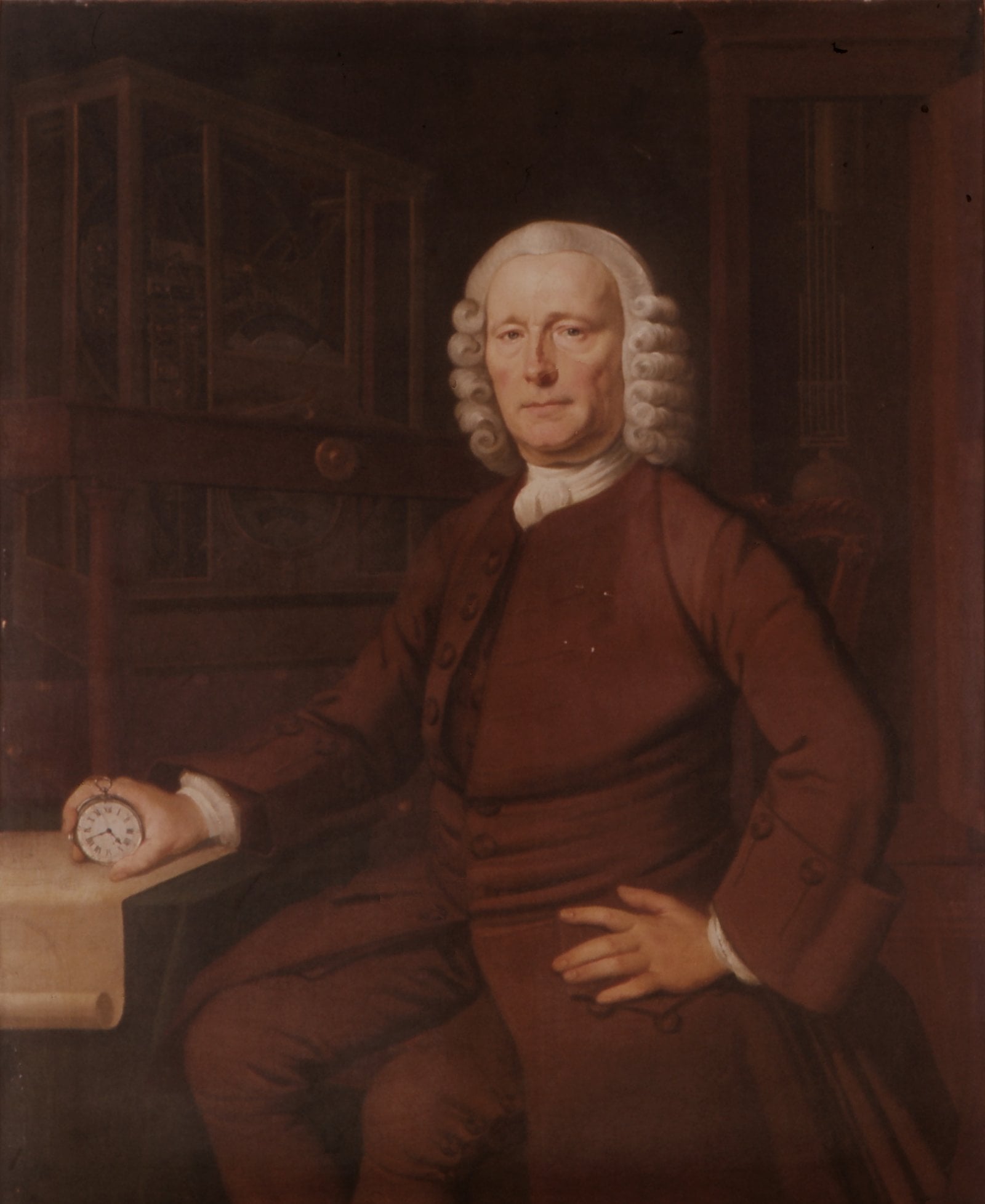 Watchmaker John Harrison (1693-1776) – Source Wikimedia
Then came John Harrison, the son of a Yorkshire carpenter and self-taught. In 1713, he built his first clock largely out of wood, using its mechanical properties to compensate for the lack of metal. In the following decade he invented the rust pendulum and the locust escapement and achieved errors of just one second per month – surpassing masters such as Tompion and Graham (who would become his mentor). Convinced that a ship's clock was possible, he began Longitude price work in 1730 and delivered the H1 ship's timepiece five years later.
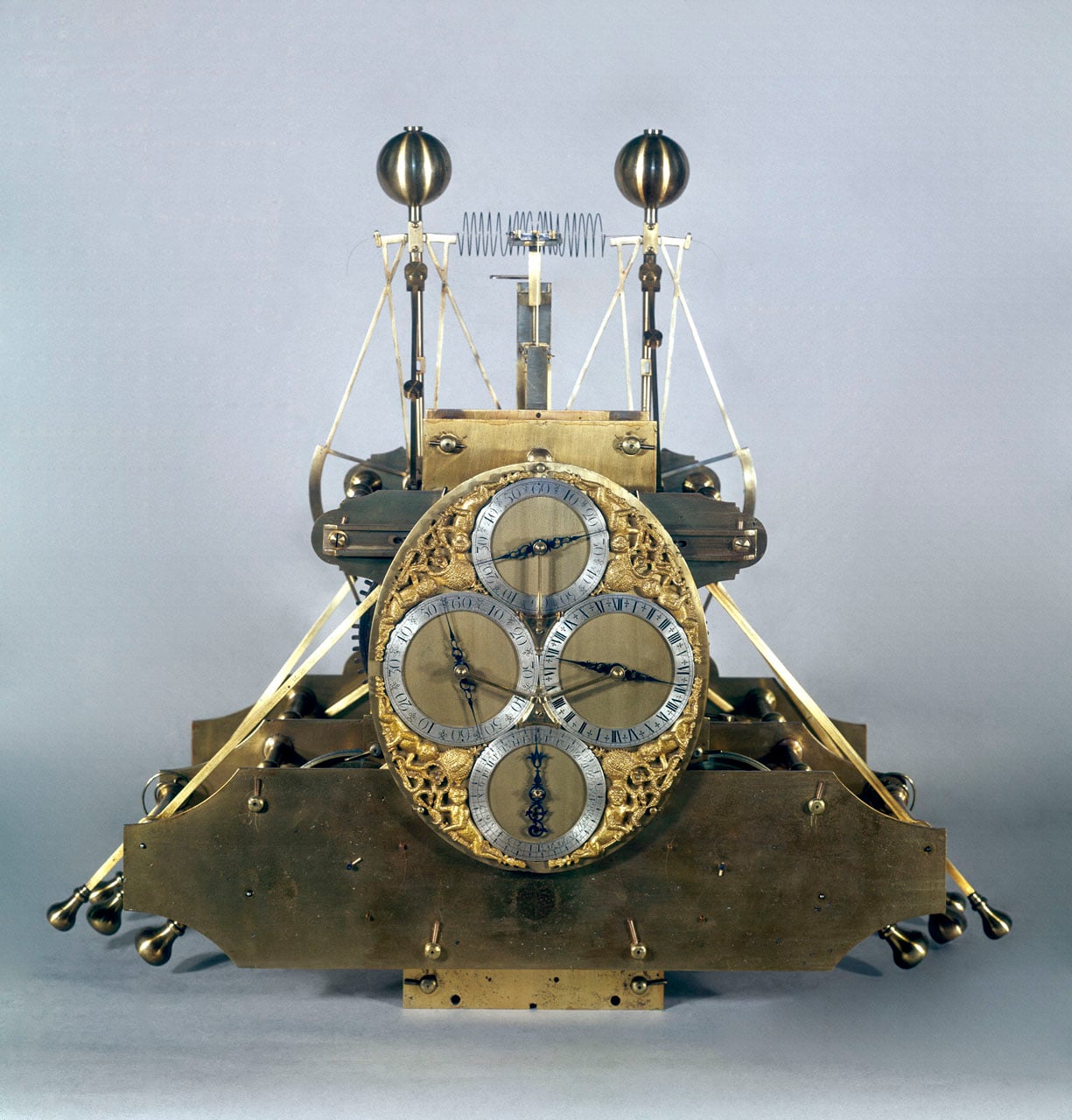 John Harrison's maritime clock H1 – Picture of Royal Museums Greenwich
The point is that Harrison stitched together existing technologies in novel ways to create a paradigm shift in performance that had a profound impact on global trade and power, to the benefit of both the British navy (already accounting for 5% of GDP – is that enough, Donald?) and the trade it secured.
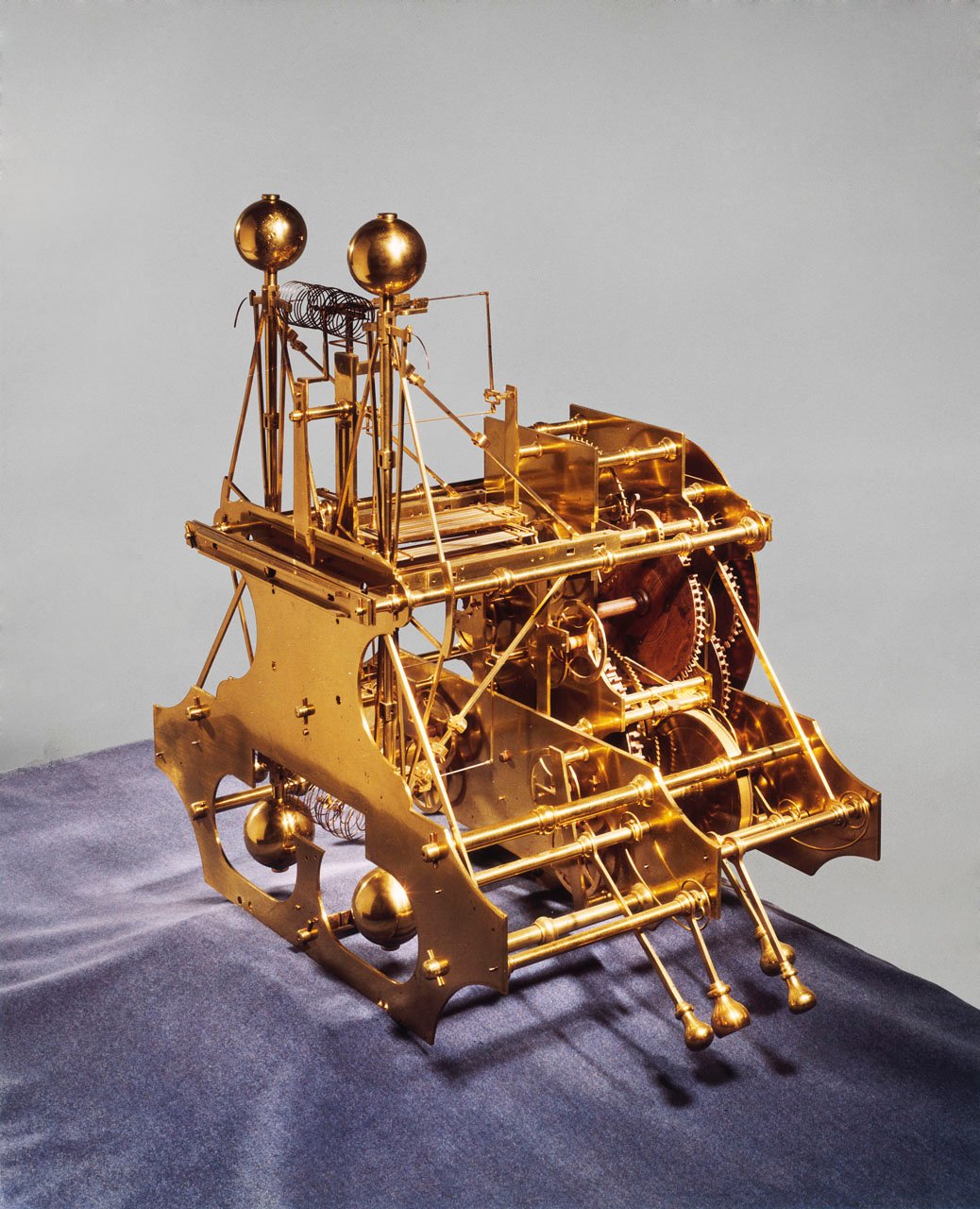 John Harrison's maritime clock H1 – Picture of Royal Museums Greenwich
John Harrison's H1 watch itself is astonishing in both its scope and ingenuity. Harrison had already made grandfather clocks that approached one second per month, easily meeting the precision required by the government, but he rechecked every element to make that precision seaworthy.
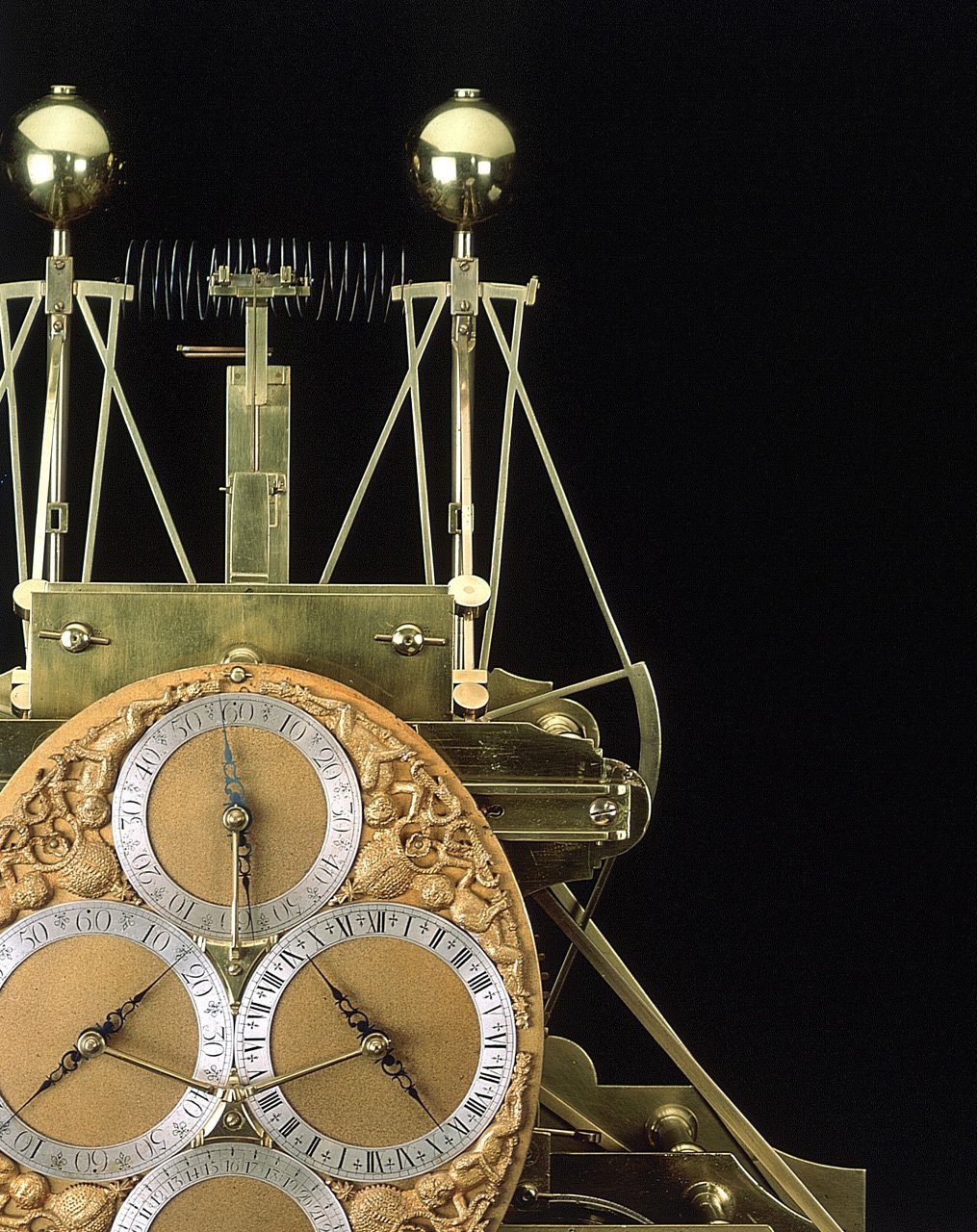
John Harrison's maritime clock H1 – Picture of Royal Museums Greenwich
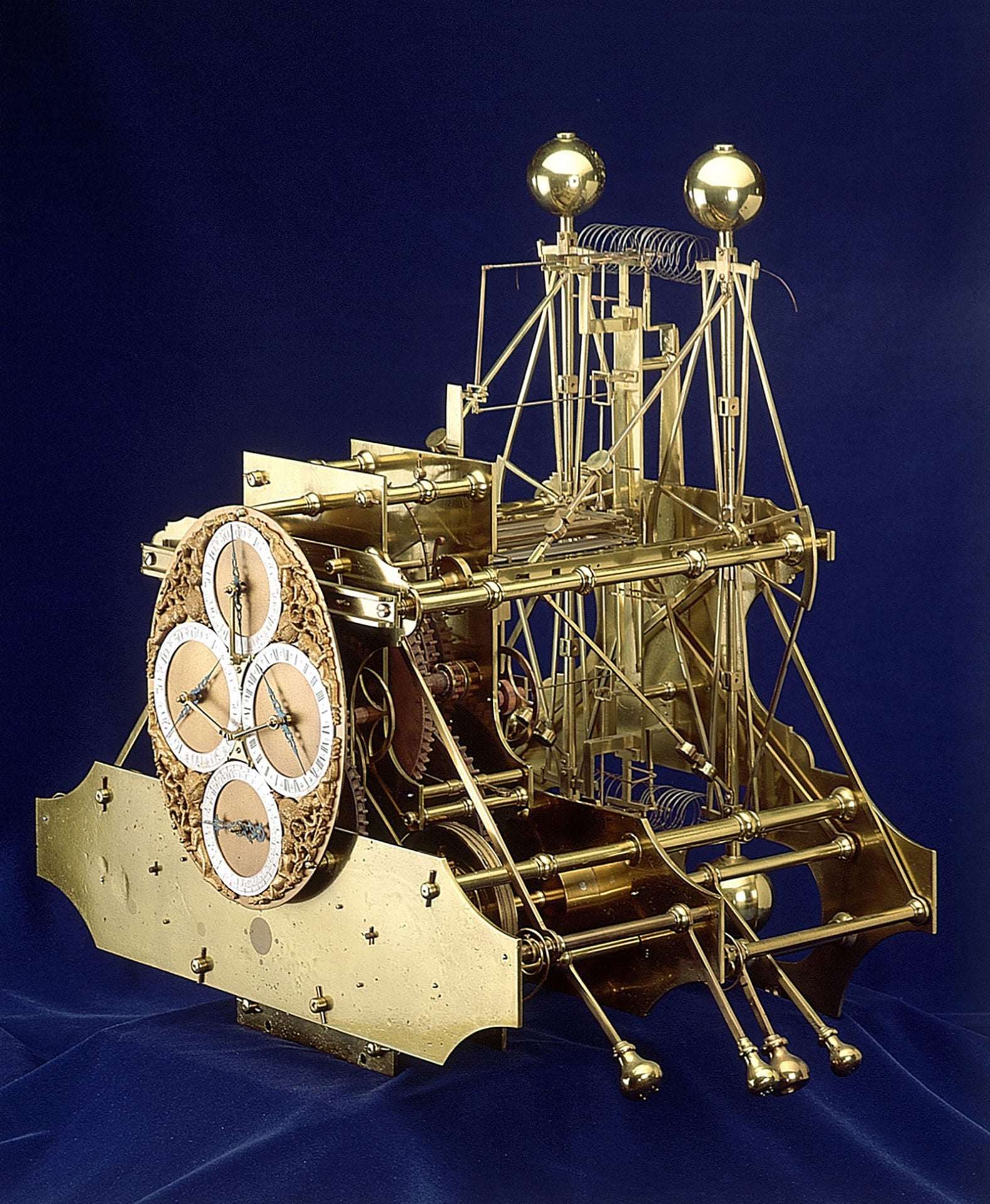
John Harrison's maritime clock H1 – Picture of Royal Museums Greenwich
H1's distinctive design consisted of two distinctive, arch-shaped pendulum structures at one end, each fitted with weighted balls at the top and bottom, and a dial at the opposite end that displayed hours, minutes, seconds and the day of the month. Between these elements was a completely different clock mechanism, a framework of horizontal shafts and vertical plates that housed a series of gears, rollers, levers, springs and weight arms made of wood and brass.
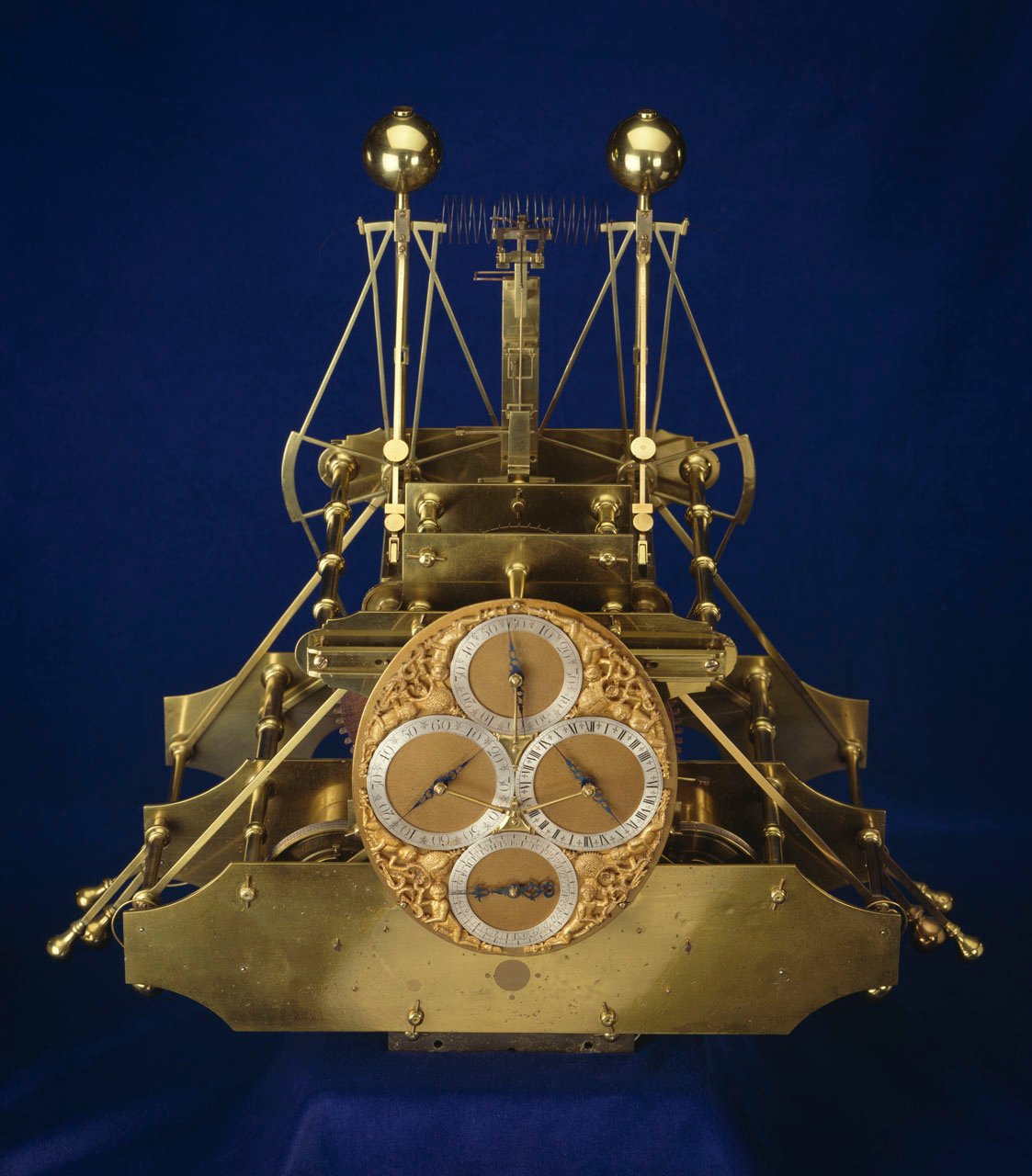 John Harrison's maritime clock H1 – Picture of Royal Museums Greenwich
Look closely, and the clarity and focus that Harrison brought to the problem is immediately apparent: the clock is dominated by two large brass pendulums moving in opposition to each other, connected by spiral springs and crisscrossing bands, and designed to counteract the influence of gravity on their oscillations – the pendulums would cancel each other out, thus nullifying the movement of the ship. There are mechanisms for temperature compensation (through materials such as bimetallic strips and geometry), friction reduction (such as the use of self-lubricating lignum vitae), and a system called “maintenance of power” to maintain propulsion (and therefore accurate timekeeping) during winding, and to top it all off, the Grasshopper escapement with its smooth-running “springy” pallets, which proved to be virtually frictionless.
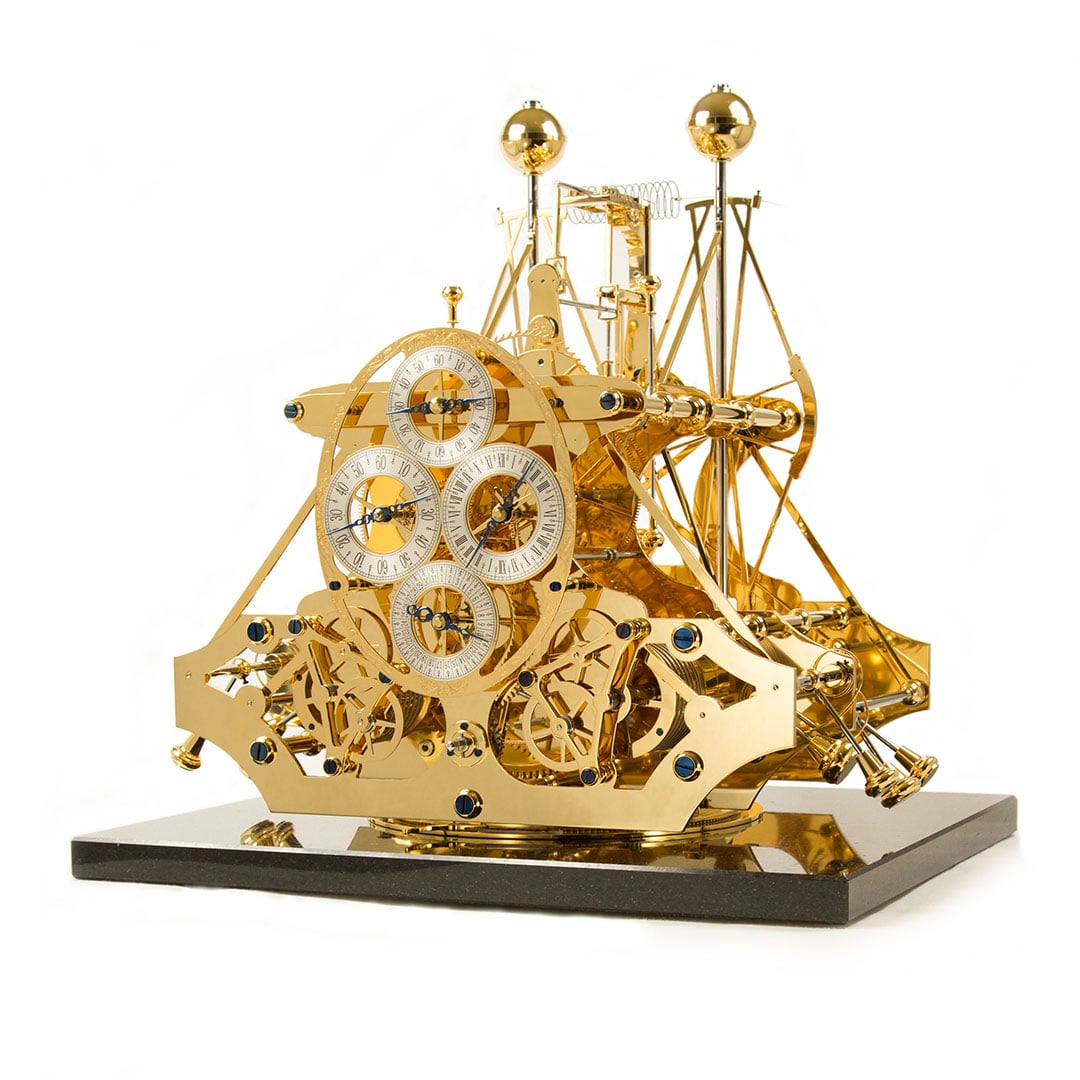 Sinclair Harding's replica of John Harrison's H1 maritime clock
Bob Bray's replica of John Harrison's H1 watch
Given the importance and innovation of the Harrison H1, it is an obvious target for producing a replica, and Sinclair Harding was already known for its series of scaled down and simplified H1 watches before AHCI member Bob Bray bought the company in the 1990s (and moved it to his native Yorkshire, just a few miles from Harrison's birthplace). This project should be different in terms of ambition and scope. The origin story was a conversation Bray had with Charlie Pragnell (CEO of the family business) at AHCI's offshoot exhibition during Watches & Wonders in 2022, which led Bray to take on the challenge of building a full-size replica that was as faithful to the original as possible. Quite simple, one might imagine, considering that the original ticks away at the Royal Observatory in Greenwich.
Not so fast! H1 was a proof of concept, a prototype that marked the beginning of a decades-long journey toward a nautical clock that offered a truly practical and affordable solution to the longitude problem. Furthermore, there are no original drawings either (the Longitude Board later insisted on drawings for H4) and the clock, acquired by the state in 1765, lay in a damp storage room for eighty years before being cleaned and did not become functional again until another 80 years later.
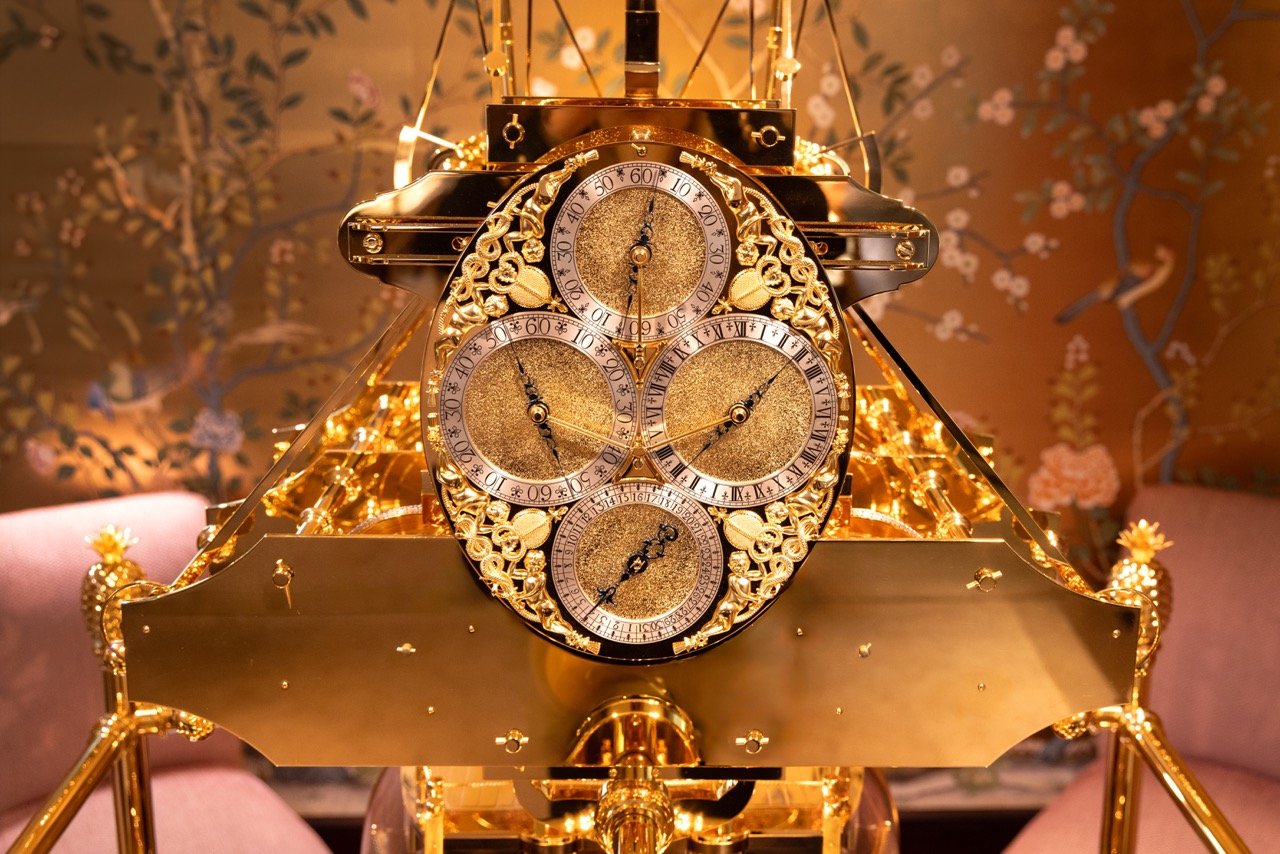
The watch was considered too delicate to be taken apart to such an extent that Bray would have simply had to recreate every single component. Therefore, a long process of direct observation began, analyzing the drawings of amateur watchmaker RT Gould, who restored the watch in the 1920s, and the work of other watchmakers who attempted to make replicas (each of which had errors). In the end, Bray had to compare what was known about each of the more than 1,500 components to the design as a whole, looking to achieve the balance of mass and geometry that Harrison had created. You can get an idea of the complexity of the task by looking at the wooden gears, which were already complex carpentry work, as a single gear consisted of 33 individual parts.
The extensive use of CAD models and state-of-the-art tools helped Bray come closer to this challenge than any of his predecessors – Harrison himself famously tinkered with it when working on the later watches, so there can be no truly pure replica. Where Charlie Pragnell and Bob Bray deviated from the original is in the presentation. H1 would have been cased to protect it from the elements (and possibly from prying eyes). Now the mechanism is about to be unveiled in all its glory, supported by a small theater!
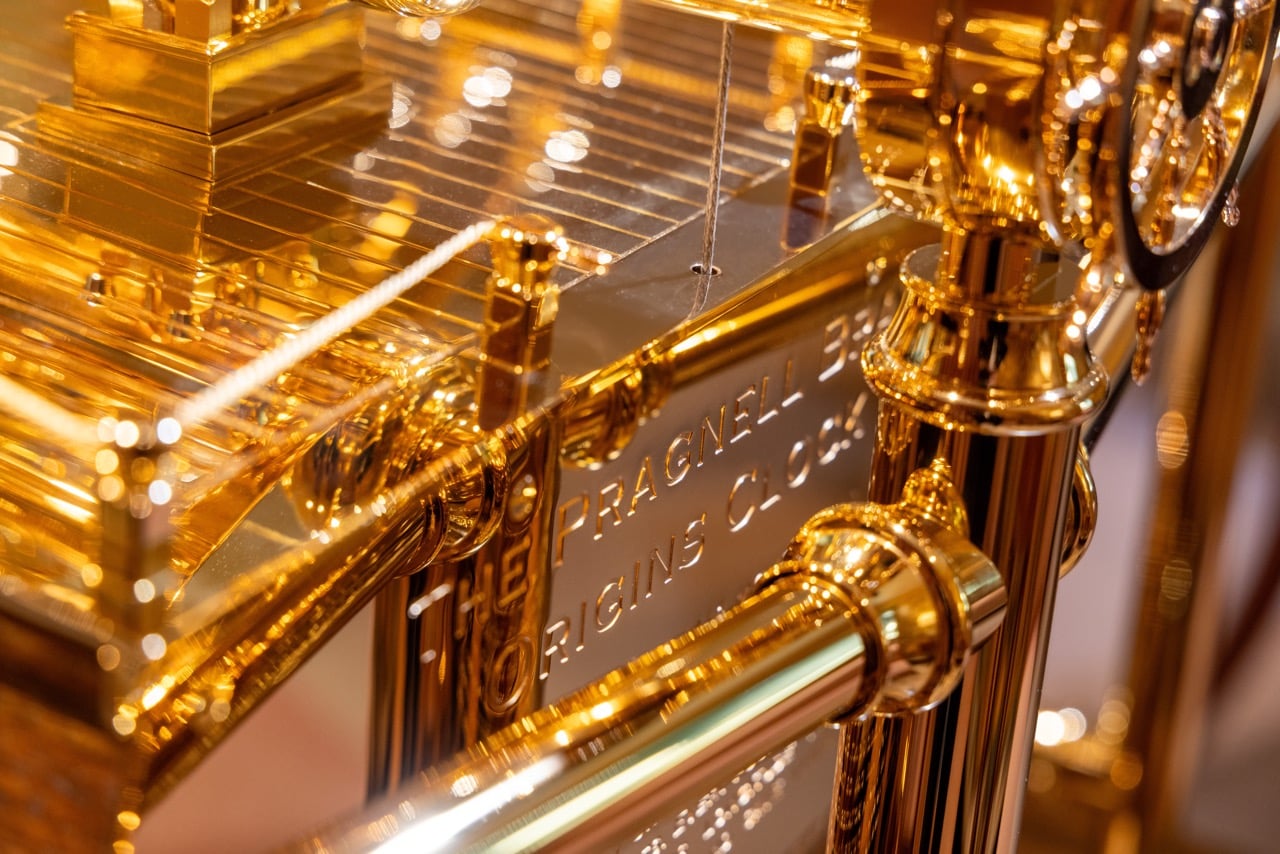
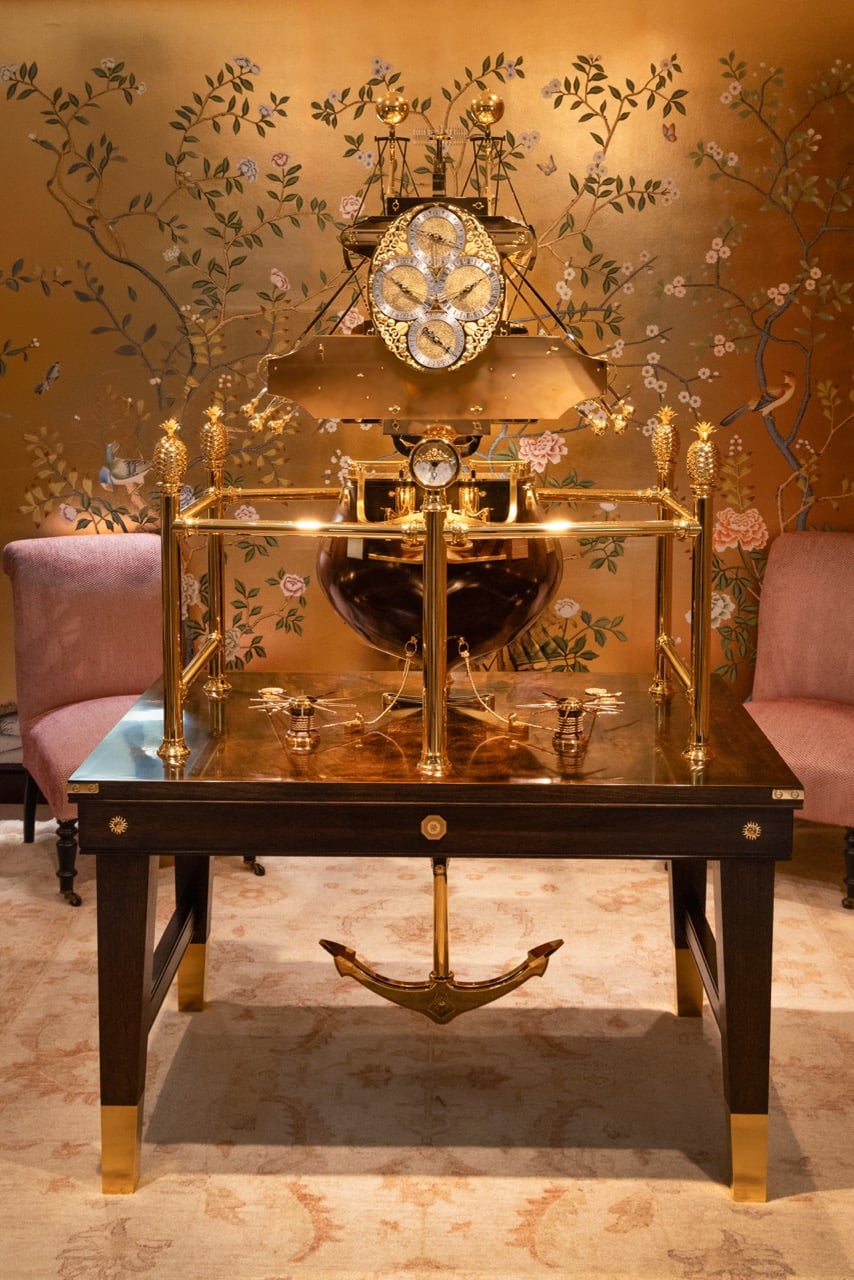
The Pragnell Bray Origins watch is impressive in its size. It is mounted on a wooden hull modeled after HMS Centurion (the ship on which it sailed as part of the test) and is mounted on a table with an anchor pendulum that moves the clock back and forth. The sight of the Origins watch in the Pragnell store in Stratford-upon-Avon is astonishing. The finish and detail are beyond reproach and difficult to discern given the sheer presence of the most radical machine ever conceived in human history. It will be on display at a gala at Goldsmiths' Hall to mark the 350th anniversary of the Royal Observatory, whose final home has not yet been decided. Pragnell has said that a limited number of commissions are being considered – I rather hope that an Atman, Heung or Musk would recognize the genius of the shy, if somewhat grumpy, Yorkshireman whose idea it was.
Further details on the Pragnell Bray Origins Clock can be found at www.pragnell.co.uk.
https://monochrome-watches.com/john-harrison-h1-maritime-clock-recreation-by-bob-bray-for-stratford-upon-avon-jeweller-pragnell/