Forgive the lyrical tone, but when you encounter a Moritz Grossmann clock, you feel how time transforms in form and substance. These are timepieces that are wonderful to look at and study in detail with a magnifying glass, but can also be wonderfully experienced through touch, balance and inner rhythm. Since Christine Hutter revived the traditional name in 2008, the Glashütte manufactory has continuously produced watches with fine, classic restraint and an almost poetic precision. Towards the end of 2025, on the occasion of its 17th anniversary, Moritz Grossmann introduced the Perpetual Calendar, his most complex creation (next to the tourbillon), a watch that combines durable mechanics and sensual design.
The case
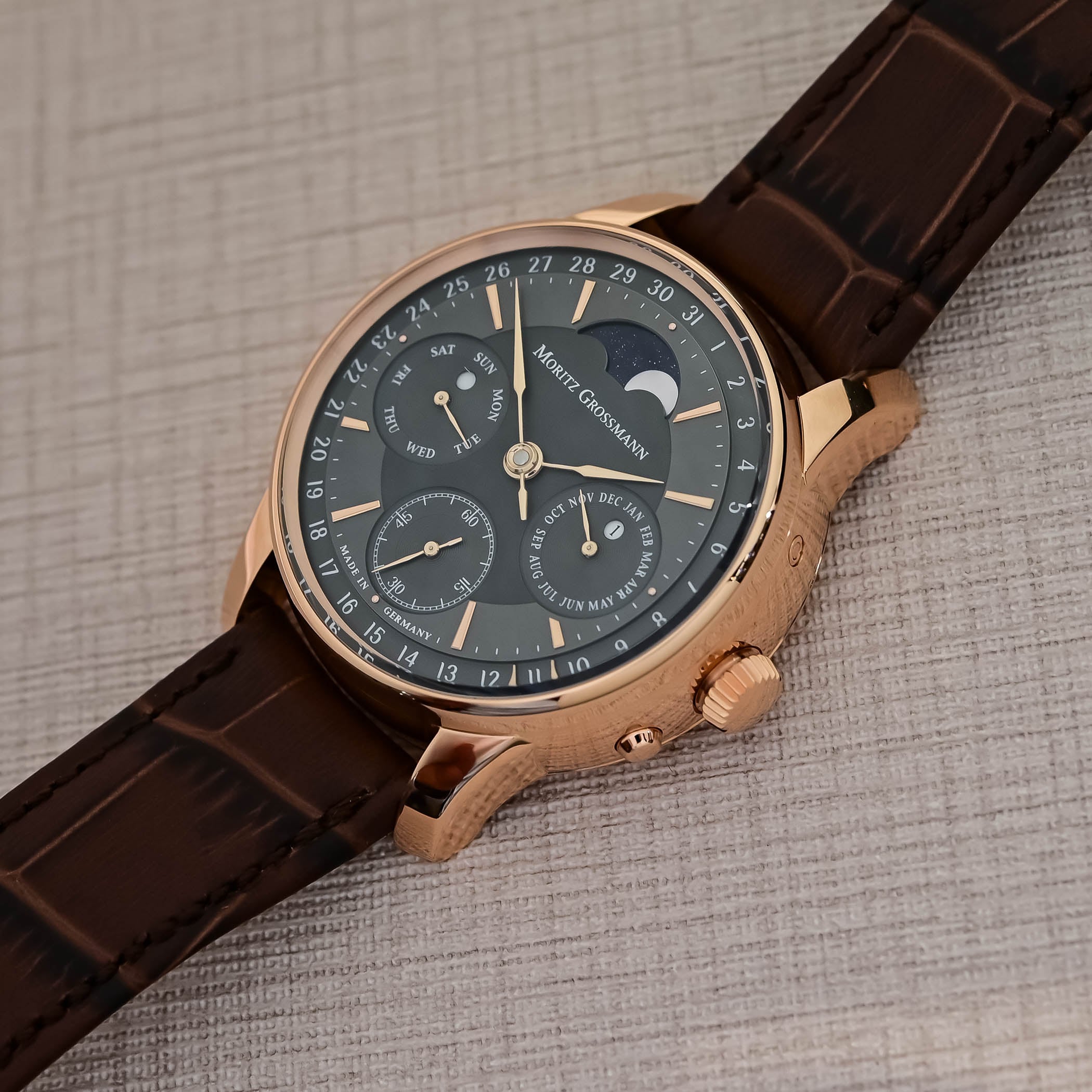
When you hold the watch in your hand, it feels as if it has been smoothed over generations. On the wrist it is massive but proportioned, measuring 41mm in diameter and 13.9mm thick. Yes, it could be thinner, but these dimensions are somehow also a trademark of the brand. The rose gold models are surprisingly warm to the touch (did I imagine that?), while the platinum version is cooler, denser and heavier – a presence that is immediately felt. The winding crown is grooved for easy grip. A small pusher at 4 o'clock is part of Grossmann's winding system, which protects the movement from dust and shock when the crown is pulled. The correctors embedded in the case (for setting the date, day, month and moon as well as a sum corrector for the date that allows all other displays to follow) react to movements with gentle, targeted clicks.
The dial
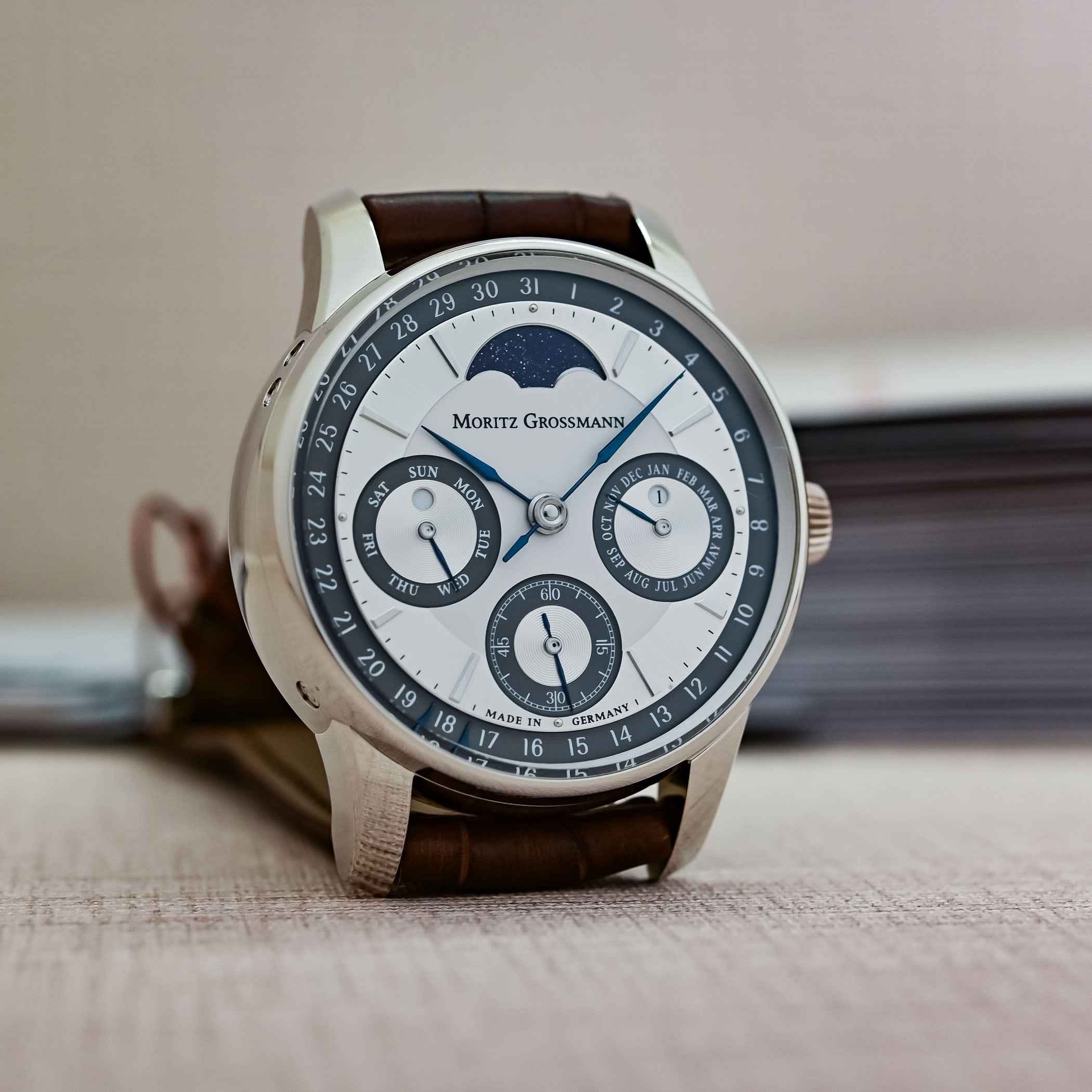
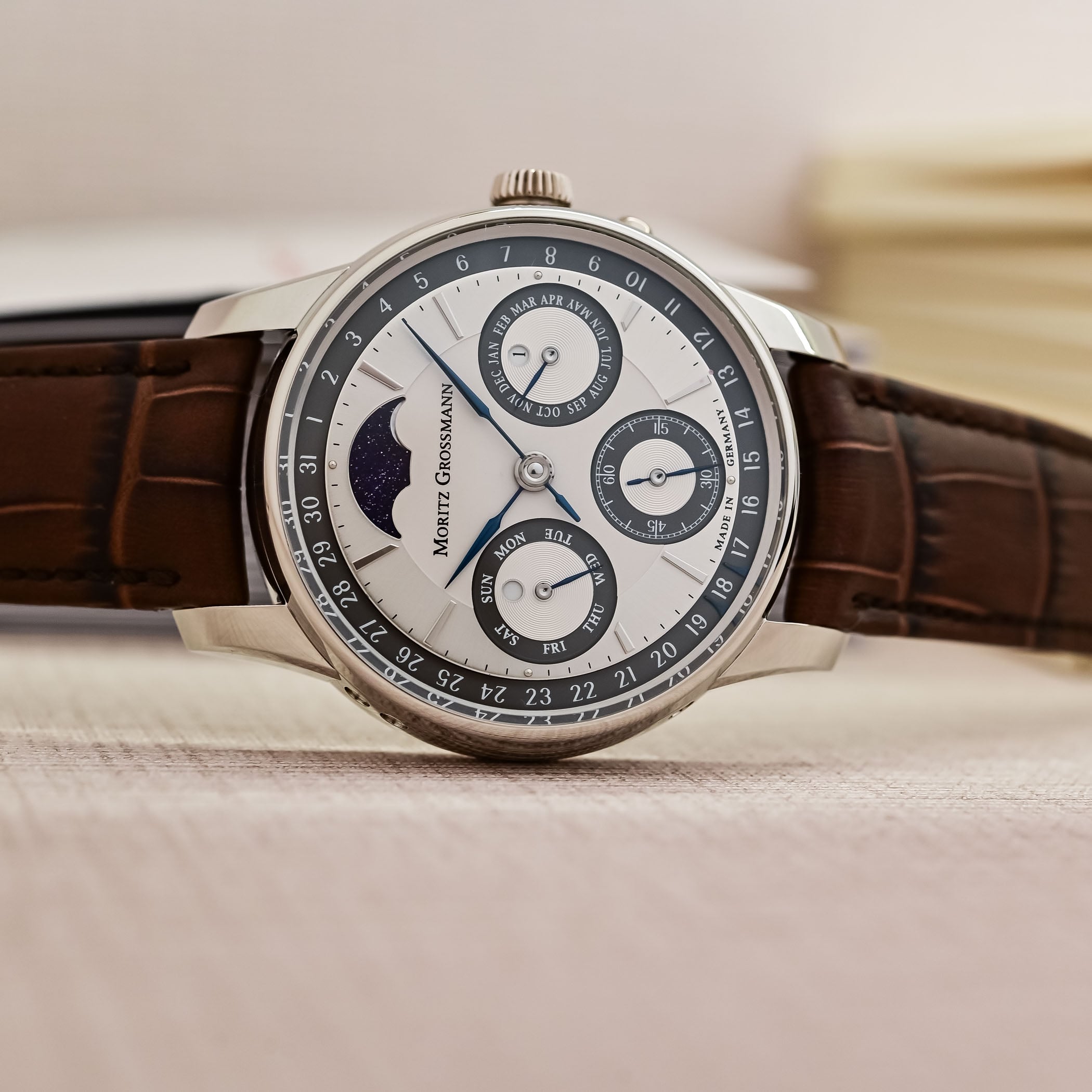
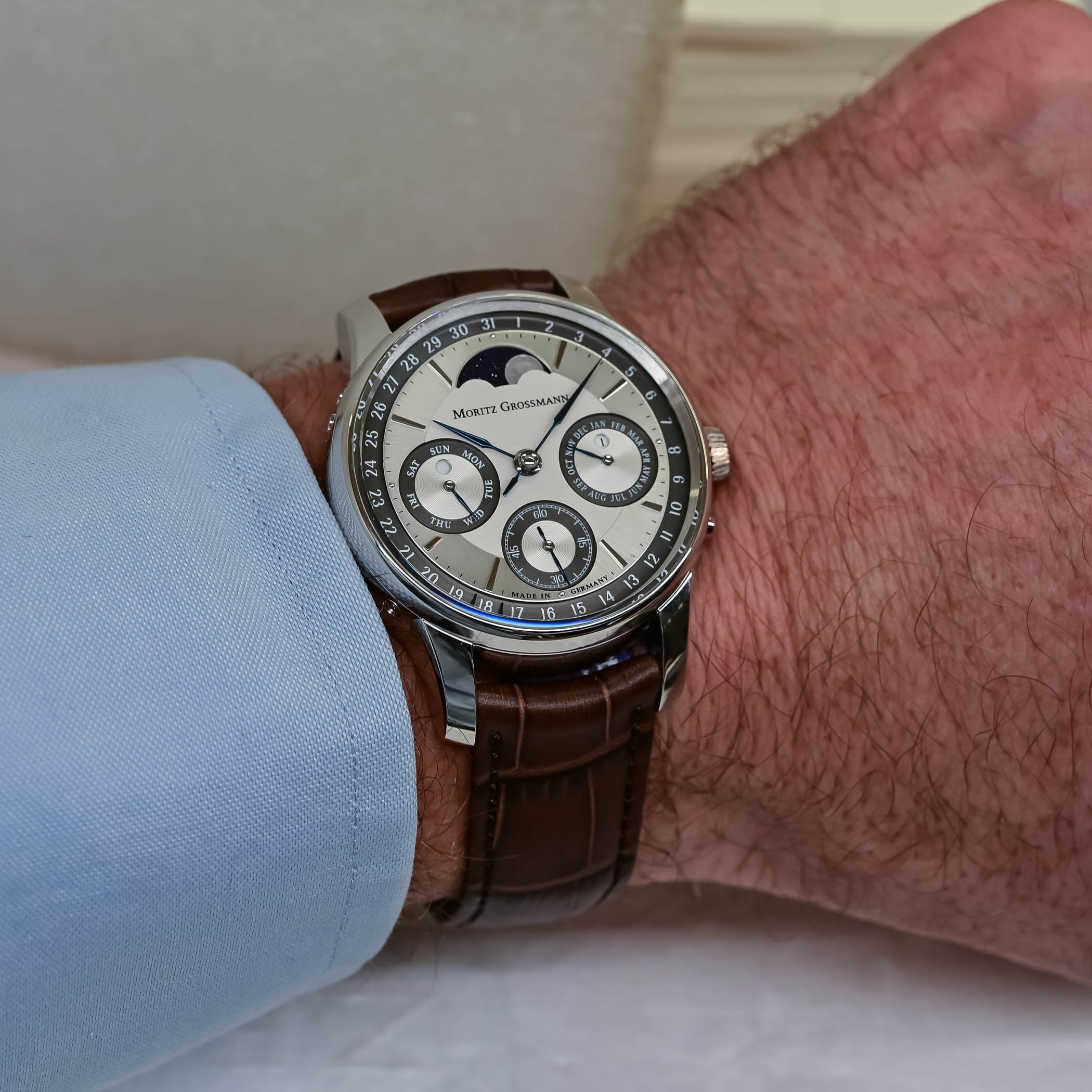
Each version of the Perpetual Calendar combines its metal with a distinctive dial, three variations that translate the same structure into different moods. The rose gold with argenté dial looks and feels classic and bright, the soft silver and white tone is reminiscent of early Glashütte pocket watches. The rose gold with anthracite dial provides a more introspective tone, while the darker shade gives the watch a solid contemporary seriousness. The silver and charcoal platinum dial (personal favorite) appears intellectual, serene and, if you let it be, cosmic, with blued steel hands cutting elegantly through the two-tone finish.
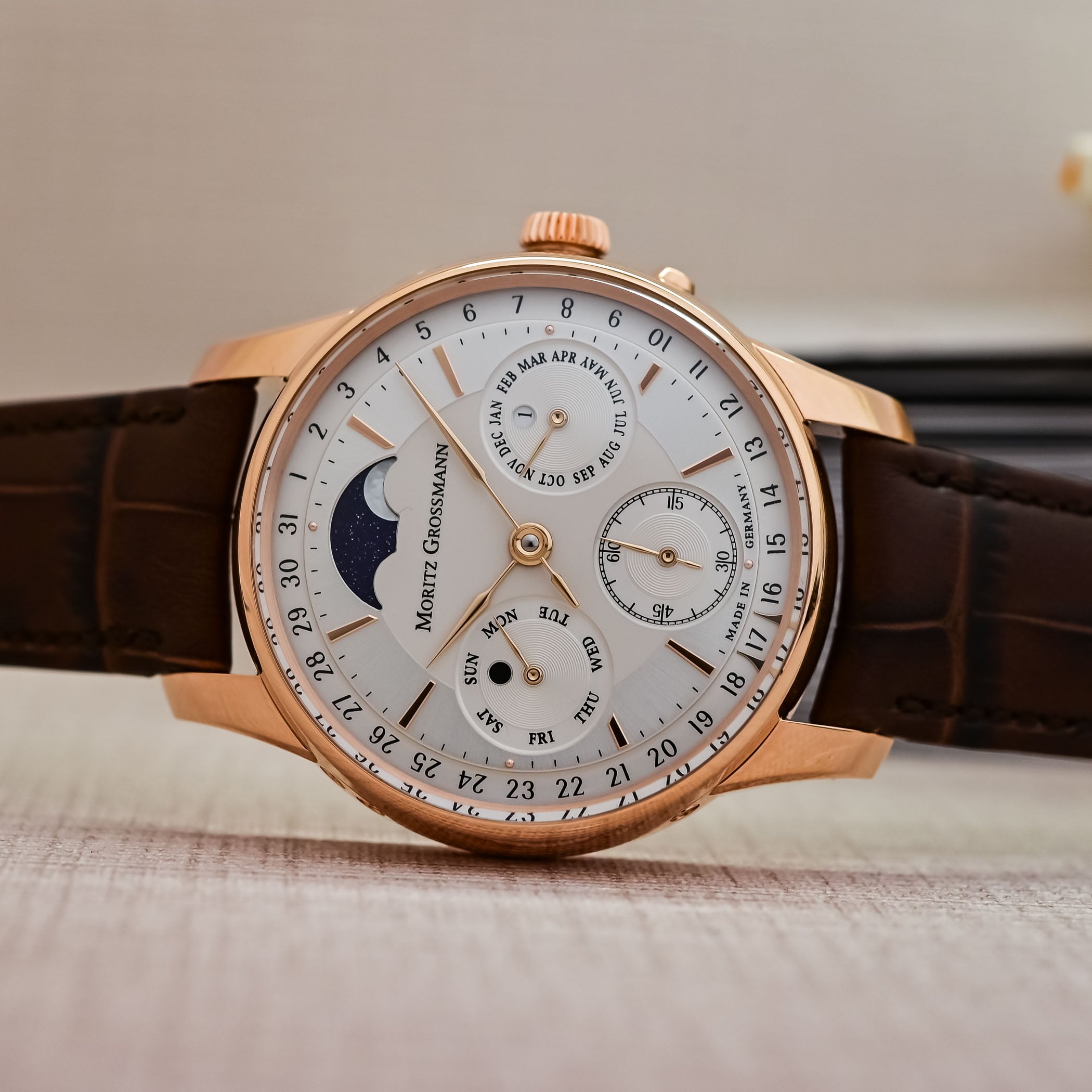
The dial is a composition of circles and textures. On the circumference, a ring bears the full date scale from 1 to 31, which is indicated not by a hand but by a small, cup-shaped frame that surrounds the correct date, making the passing of the days almost exciting to watch.
Two smaller subdials, the day of the week at 9 o'clock and the month at 3 o'clock, are decorated with azure grooves. At the top of each, a small round window provides quiet insight: one shows the leap year cycle, the other is a day-night display. At six o'clock, the small seconds dial brings the otherwise almost motionless image to life. At twelve o'clock is the watch's enchanting feature, a moon phase display with a mother-of-pearl moon and a dark blue goldstone sky; Copper crystals glitter on the surface of the goldstone, not too bright, but gently.
The movement
Turning the watch reveals Caliber 101.13, a hand-wound, meticulously crafted movement that combines a 190-component base caliber with a 211-part perpetual calendar module. The wide 2/3 plate made of untreated German silver has a warm, slightly golden hue that looks like champagne due to the festive season. The hand-engraved balance cock, the polished gold chaton screws, the wide stripes and the slow beat (18,000 vibrations per hour) of the 14.2 mm balance look and feel very traditional, exemplary of Glashütte watchmaking art.
The details
The Moritz Grossmann perpetual calendar (all versions) is offered on a hand-sewn strap made of dark brown alligator leather with a pin buckle in gold or platinum. The price for the gold editions is 83,000 euros and the platinum version 91,800 euros.
Further information can be found at www.grossmann-uhren.com.
https://monochrome-watches.com/experiencing-the-moritz-grossmann-perpetual-calendar-hands-on-review-price/