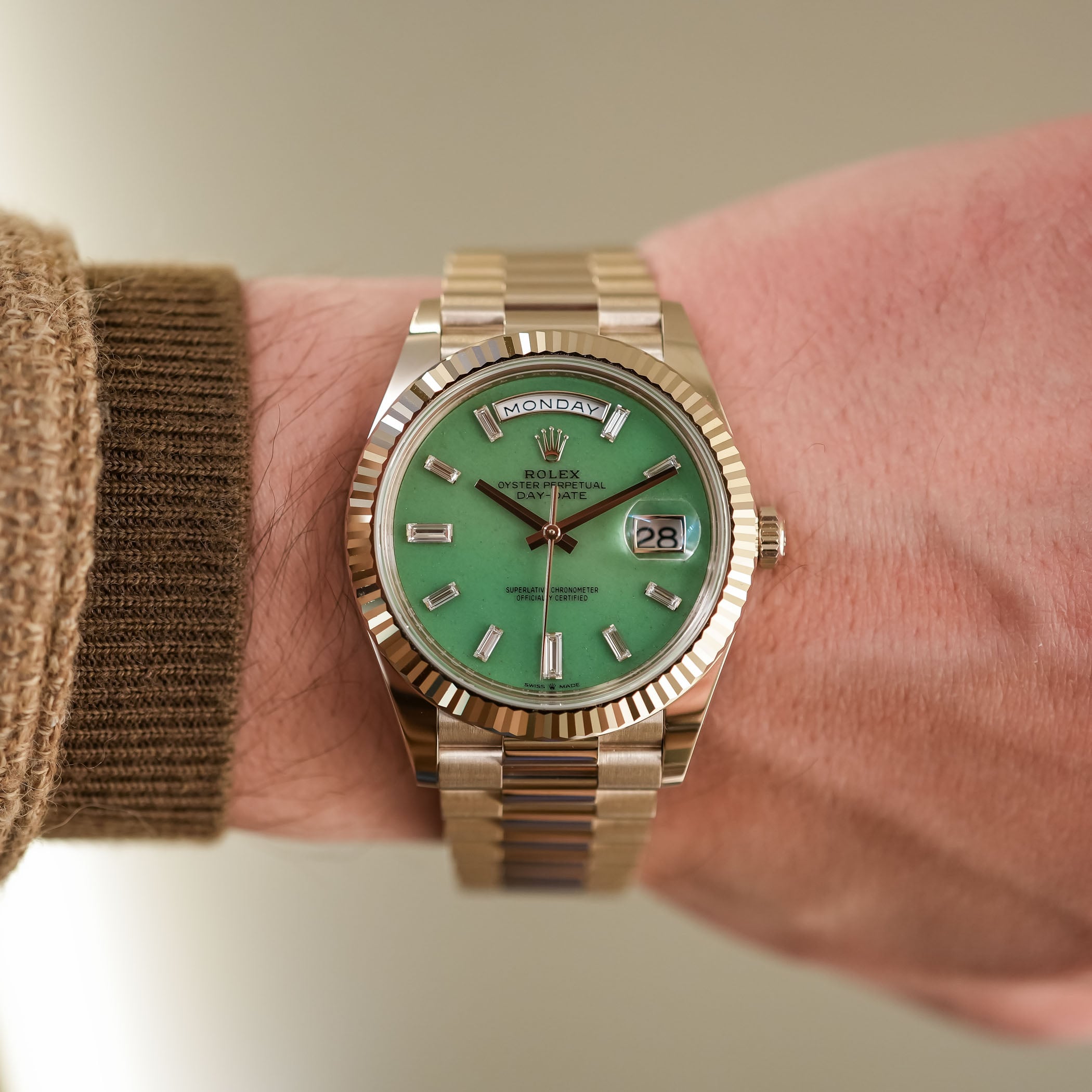
In parallel with the celebrations surrounding the 100th anniversary of the Oyster case, Rolex had another surprise in store: a new in-house gold alloy. The first watch known as Jubilee Gold to showcase the proprietary alloy is the iconic Day-Date, also known as the “Presidential Watch.” Cataloged together with the Rolesium Daytona Albino in the “Exceptional Watches” collection, this model not included in the catalogue, reference number 228235JG (for Jubilee Gold), not only presents the new gold alloy in the best light, but also features an alluring and perfectly matched green aventurine stone dial.
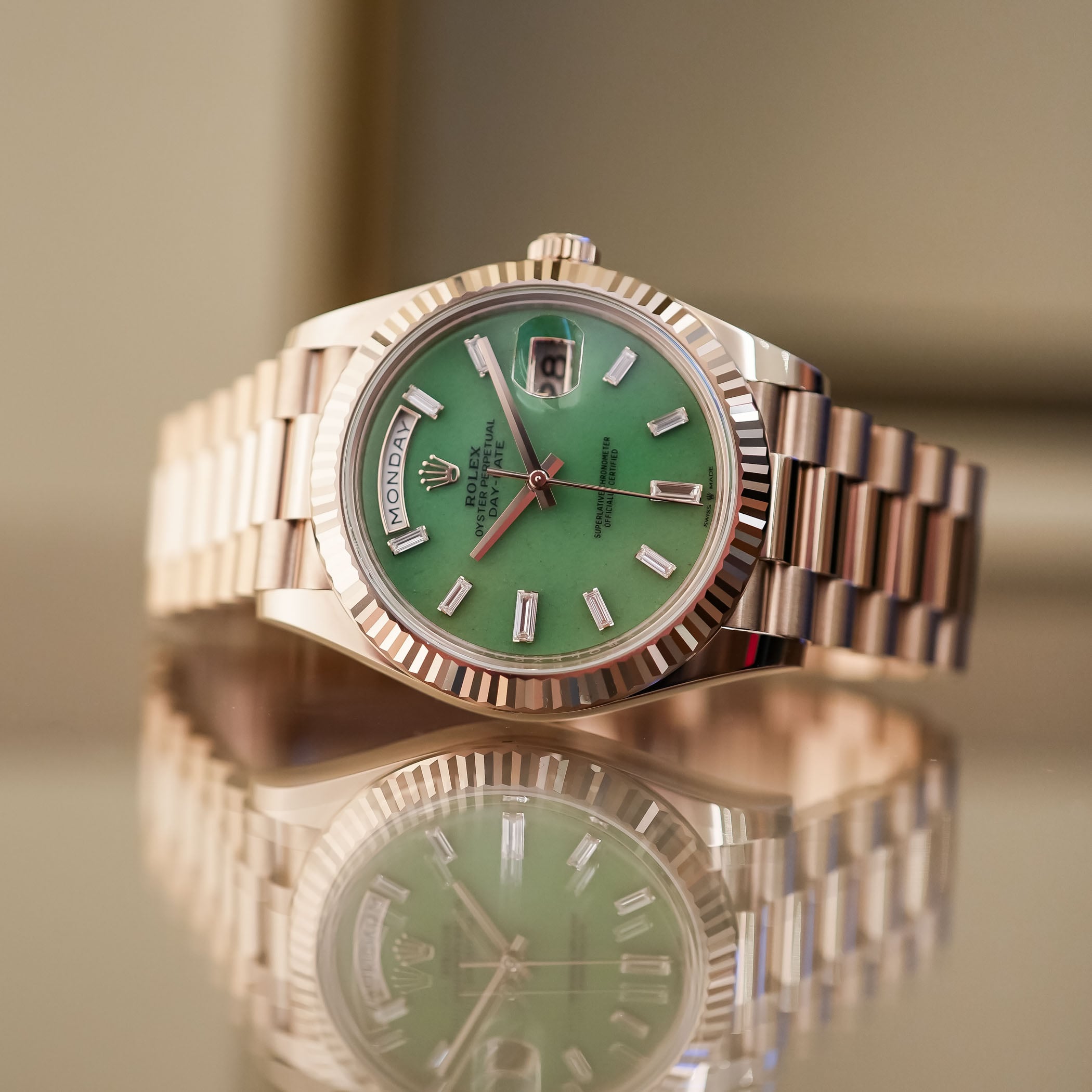
The choice of a day date is symbolic, not just because it turns 70 this year. As Crown's flagship luxury watch since 1956, it is the only collection made exclusively from precious metals (platinum and 18k gold) and has been in continuous production since its debut. The original 36mm Day-Date was also the first wristwatch to display the day of the week in full at lunchtime (available in no fewer than 26 languages) in an arched window, with a separate date at 3 o'clock, magnified by a cyclops lens. Combined with a beautifully crafted 3-link President bracelet with rounded links and a concealed crown clasp, the robust Oyster case can withstand depths of up to 100 m. A successful combination of durability and luxurious metals, the Day-Date was well received by American presidents in the 1960s, including Lyndon B. Johnson.
Jubilee Gold is the brand's first new gold alloy in over 20 years, following the launch of Everose Gold in 2005. It's always hard to describe, but our take on Jubilee Gold is that it's less flashy than yellow gold, warmer than white gold, but not quite as warm or coppery as rose gold. A mix of all three with a more subtle and sophisticated beige-pink aura, Jubilee Gold is used for the Oyster case, fluted bezel and impressive President bracelet. Although the polished surfaces – such as the bezel, lugs and central links of the bracelet – reflect light, the effect is more subtle and softer, although I cannot detect the “warm gray tones” suggested by the brand. Be that as it may, it is an elegant and sophisticated alloy, and Rolex and its metallurgical experts deserve credit for tinkering in the brand's own foundry (where cases, bracelets and all precious metal alloys as well as Oystersteel are produced) in Plan-Les-Ouates, just outside Geneva. The composition of this new Jubilee Gold…? An industrial secret that has not yet been revealed.
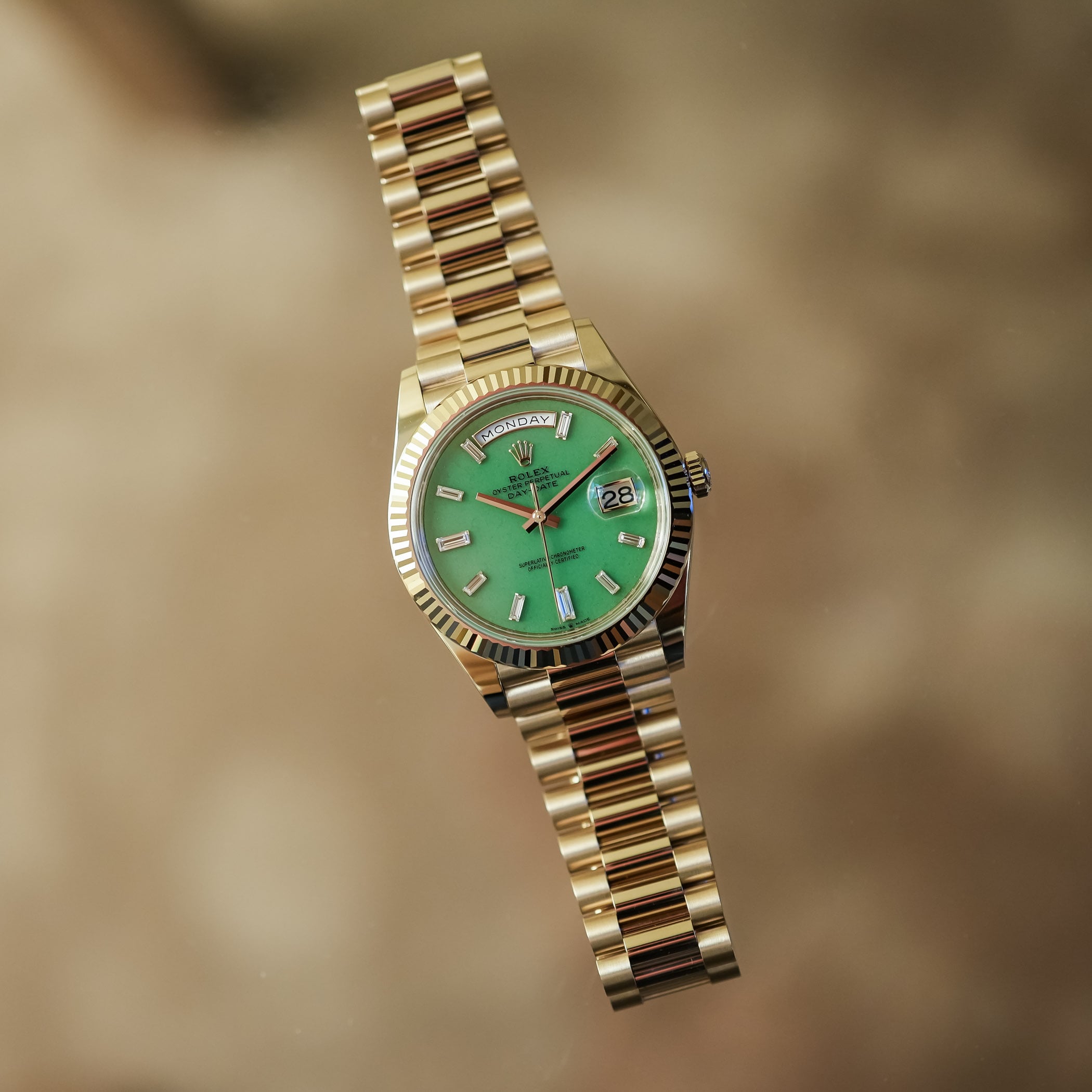
This special edition of the 40mm Day-Date model, a case size introduced in 2015 alongside the Superlative Chronometer Certified caliber 3255, is 12mm thick and features a classic Oyster monobloc case centerpiece with a screw-down Twinlock crown and caseback to ensure 100m water resistance. And as always, the signature fluted motif is used on the bezel and caseback. The new gold alloy is made entirely from a solid block of 18k anniversary gold, giving the watch an incredibly sophisticated appeal. Reserved exclusively for this family, the President 3-link bracelet features a concealed folding crown clasp with patented ceramic inserts to increase flexibility and prevent wear. Alternating polished and satin-finished surfaces elicit different shades and reflective properties from the new gold alloy.
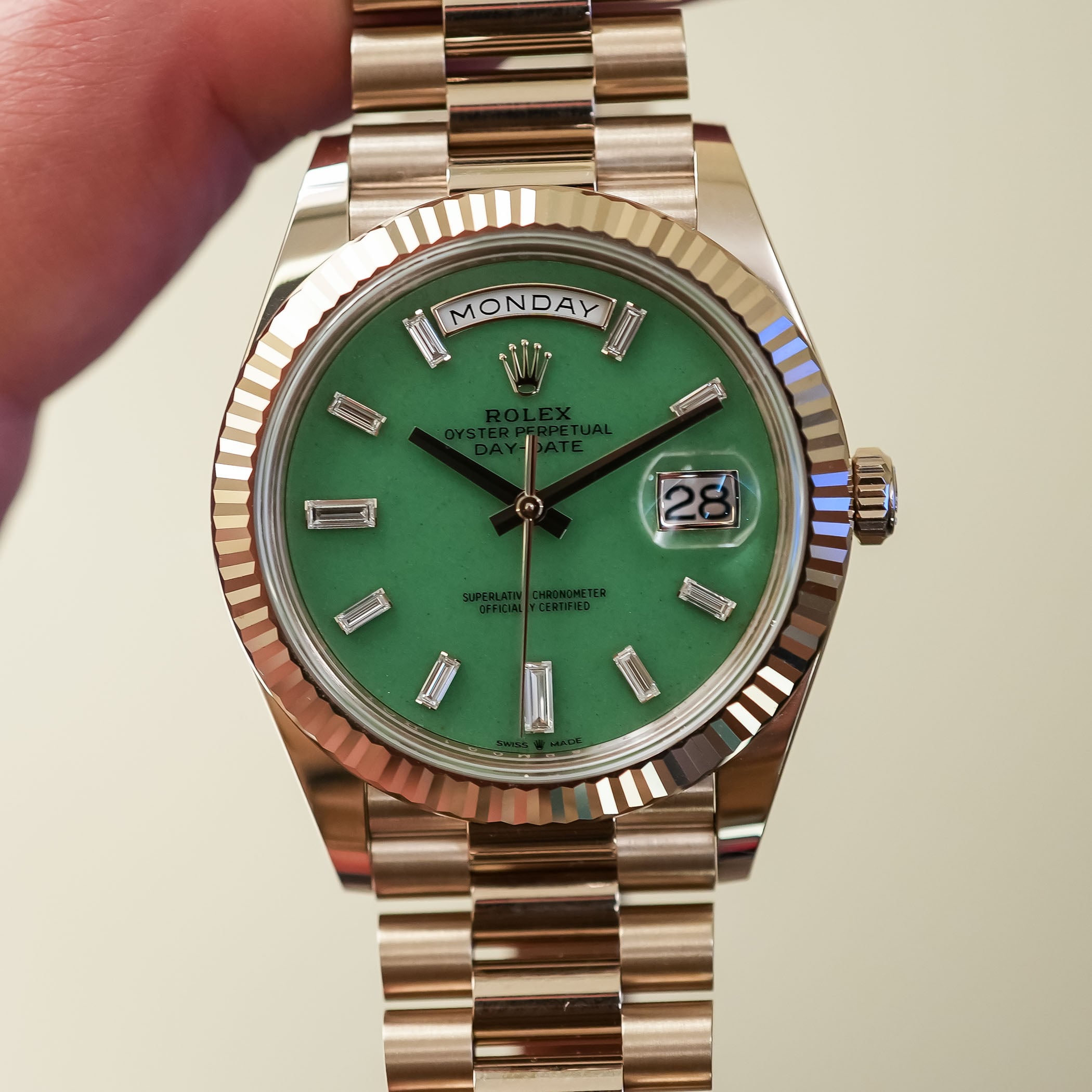
The trend for dials made of aventurine glass, meteorites and stones is omnipresent today. No stranger to hardstone dials, Rolex began experimenting with the material in the 1970s, and several Day-Date references appeared with exotic stone dials. The dial of the new Day-Date is in a very attractive light green aventurine tone. Not to be confused with artificially produced aventurine glass. Aventurine stone belongs to the quartz family and is a natural material. Green is one of the predominant colors in natural aventurine, and the dial's delicious milky green hue reveals the stone's naturally occurring inclusions.
The combination of anniversary gold and aventurine is a match made in heaven. The applied Rolex crown, the frames of the date and day windows, the blunt-tipped hour and minute hands, and the settings for the baguette-cut diamond indices are all made of Jubilee gold. Although some people shy away from daintier diamond cuts, the graduated geometric lines of the ten baguette-cut diamonds give them a confident appeal. The dial is protected by a scratch-resistant sapphire crystal with an anti-reflective coating.
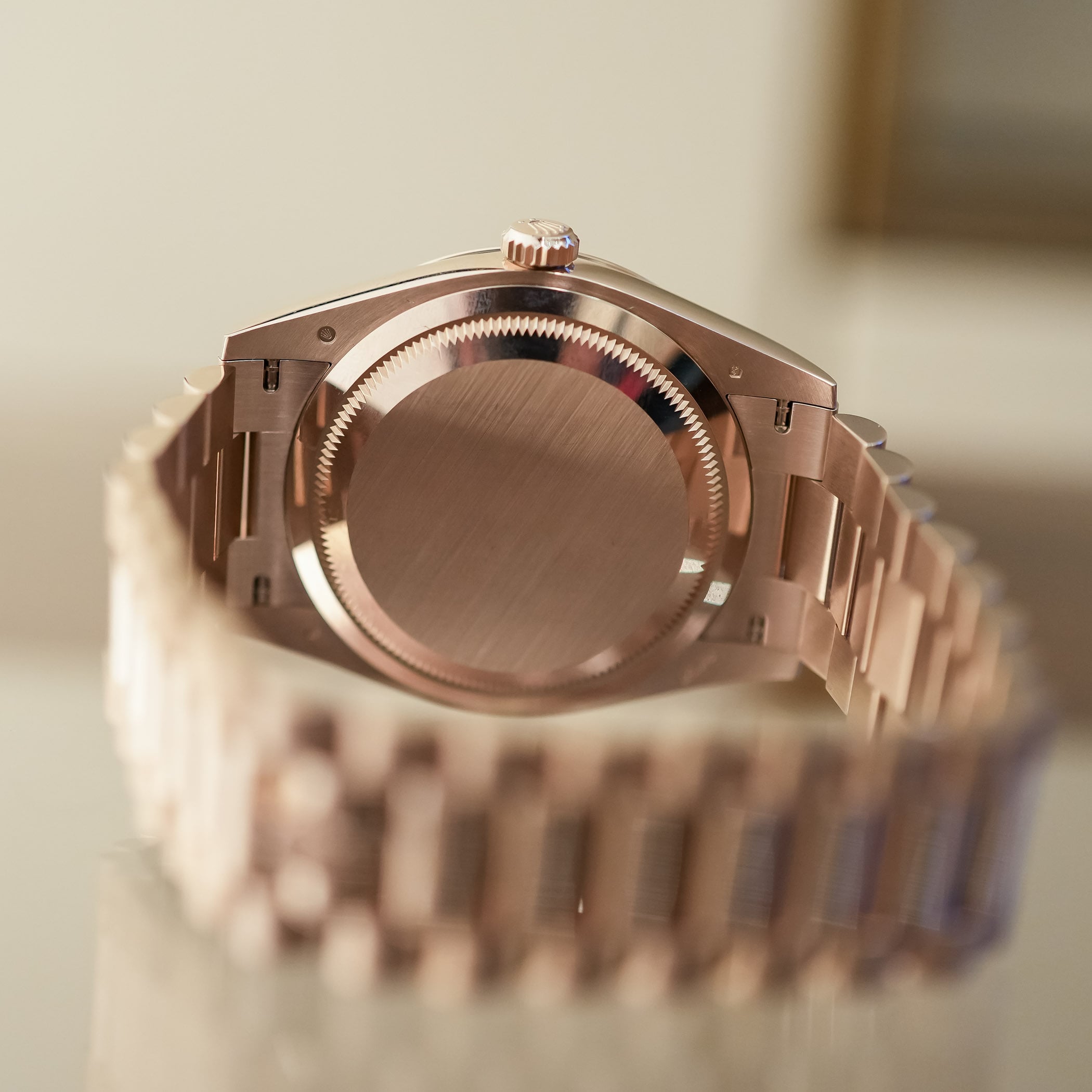
The automatic caliber 3255, which has been the driving force of this family since 2015, is hidden under the caseback. With a power reserve of 70 hours and a chronometric precision of +/-2 seconds per day, this superlative chronometer movement is wound by a bi-directional perpetual rotor. Its innovations include the patented Chronergy escapement made of nickel-phosphorus, which not only offers high energy efficiency and remarkable resistance to strong magnetic fields, but also ensures reliable operation. To increase the shock resistance of the movement, the oscillator is mounted on powerful Paraflex shock absorbers.
As previously mentioned, this Day-Date 40 reference 228235JG is an out-of-catalogue model, meaning it will only be available to a select handful of very loyal customers and in very low production numbers – yes, another near-impossible-to-get model from Crown, just like the Rolesium Daytona or Le Mans Daytona before it. The selling price is approx 62,000 euros. More information at Rolex.com.
https://monochrome-watches.com/rolex-oyster-perpetual-day-date-40-jubilee-gold-green-aventurine-228235jg-review/