Without a doubt, one of the most discussed releases of Watches and Wonders Geneva 2026 and the biggest surprise of Rolex for its 2026 collection… There’s now a new steel Rolex Daytona, but actually not quite. See, for decades, the steel Oyster Perpetual Cosmograph Daytona has been available in basically two versions only – white dial with black accents, black dial with silver accents. At first sight, we thought that a third steel version of the Daytona was about to be added to the collection, with its Albino-styled dial. Well, the story is more complex. The new reference 126502 is essentially a steel watch, but not entirely. It is Rolesium. It has a full-white dial of a very different nature. It has an open back, a first for a (mostly) steel version. And it is basically unobtainium (as the watch community would say). Are we looking at the end-game Daytona? Let’s dive into the details of the Rolex Daytona Rolesium 126502.
The context
In 1963, Rolex introduced a brand new, modern, racing-inspired chronograph with an external tachymeter bezel (an invention of Omega with the Speedmaster), a watch that should have been named Le Mans, but became the legend that we now know under the name Cosmograph Daytona. Long story short, the watch has kept its Daytona name for over 60 years, after Rolex closed the deal with the 24 Hours of Daytona. And if you want to know all about the history of this emblematic chronograph, one of the most iconic watches on the market, I encourage you to have a read of our Evergreen article.
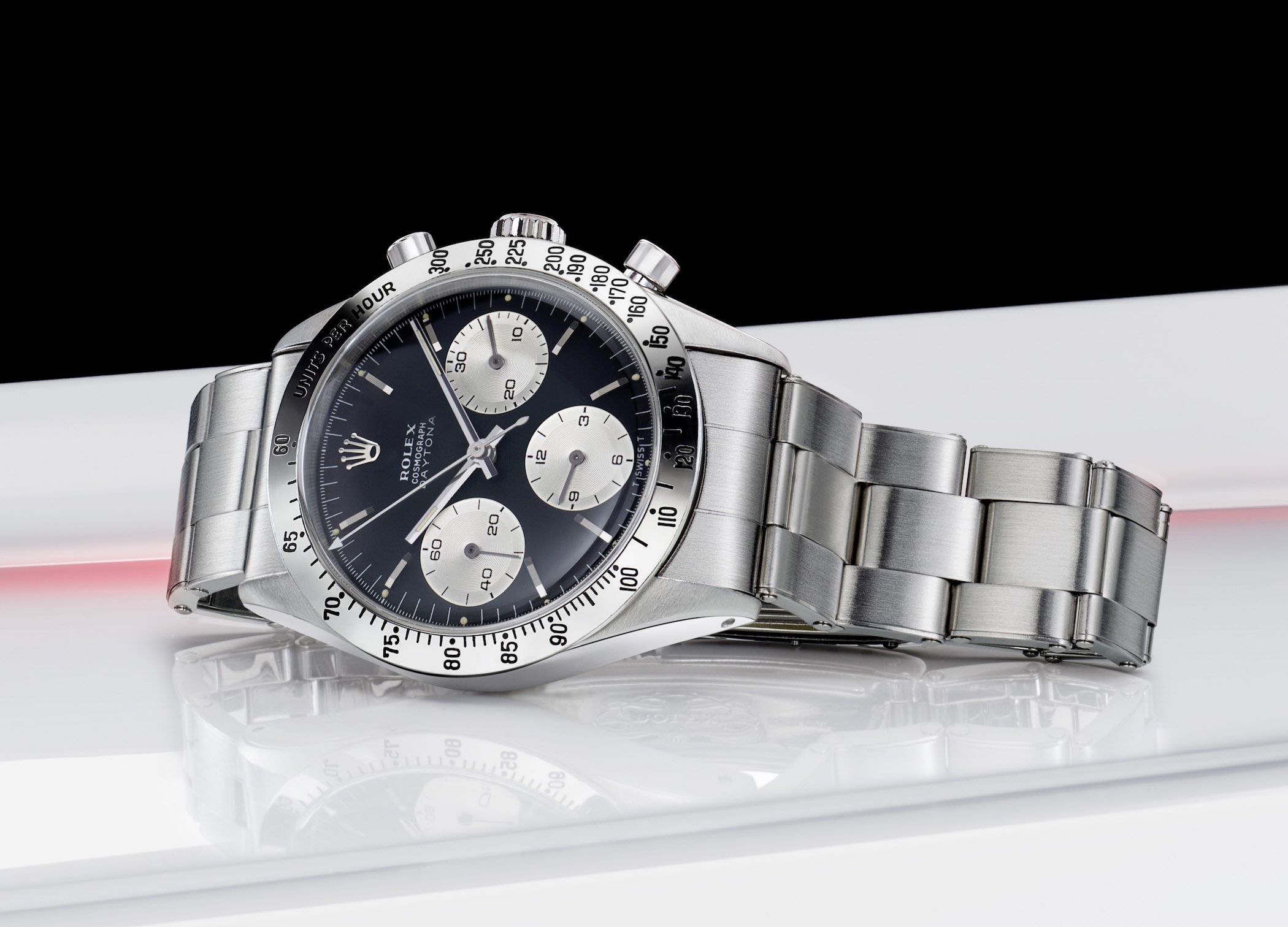 1963 – first-generation Daytona, reference 6239
Now, let’s talk steel Daytona watches, which are the essence of the collection after all. There have been dozens of precious metal iterations over the years, but the steel models are the cornerstone of the series. And surprisingly, apart from very rare editions or prototypes, the steel Daytona has always been available in 2 versions only, whatever the generation we’re talking about. From 1963 to 1988, Rolex’s racing chronograph was powered by hand-wound movements supplied by Valjoux (calibre 722 or 727) and was available with either a steel bezel with an engraved tachymeter scale or a black acrylic bezel with a tachymeter scale printed on the underside. And, looking at the entire range of references (6239, 6240, 6241, 6262, 6264, 6263 and 6265), the dials were always either silvery-white with panda-style black sub-counters or black with reversed-panda white sub-counters. Even the exotic dials, so-called Paul Newman, used the same overall layout (some with inclusions of colours on the scales).
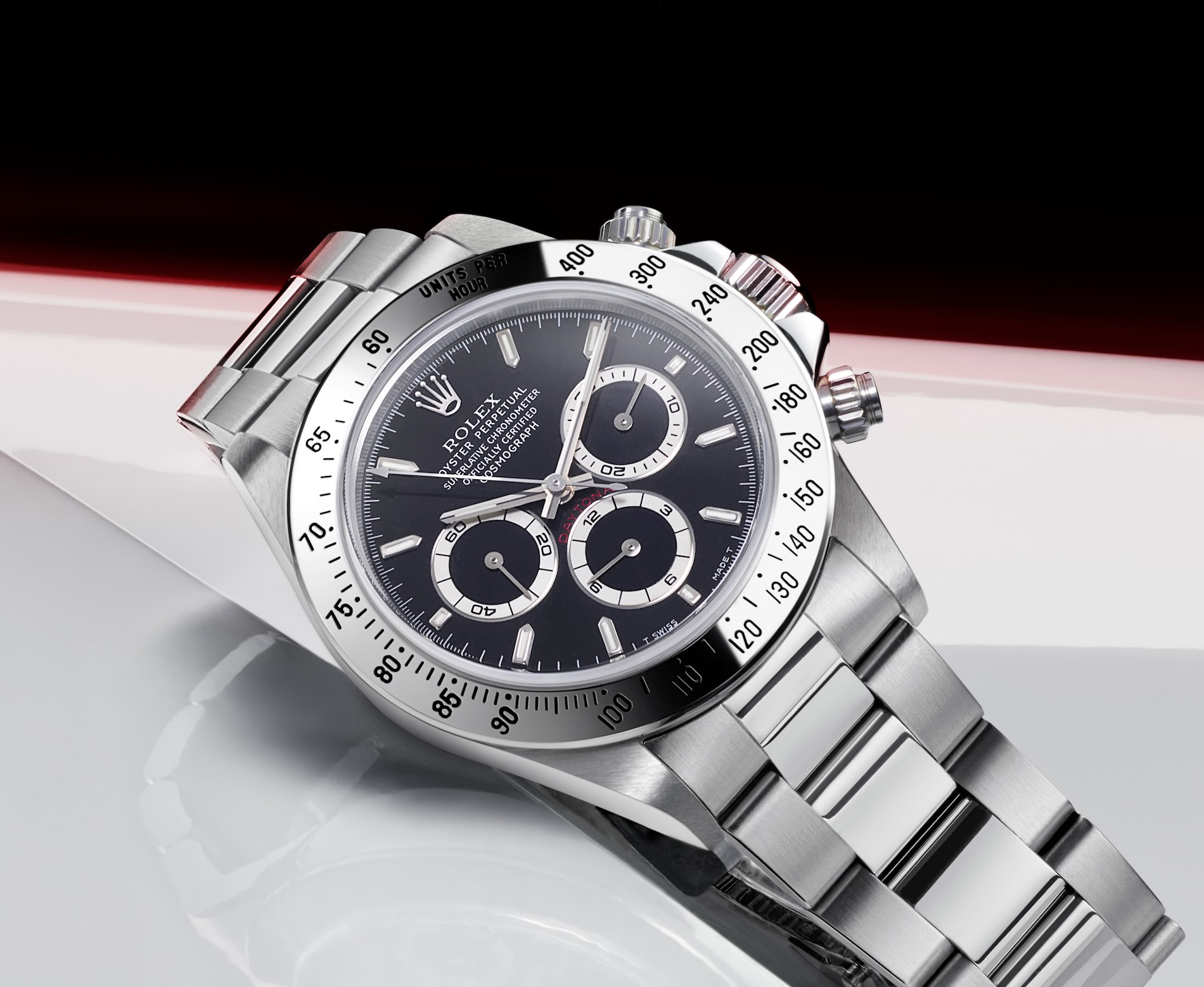 1988 – First Rolex Daytona with self-winding mechanical movement, reference 16520
In 1988, Rolex drastically changed its chronograph, as the Daytona entered the automatic era. Now powered by the calibre 4030 (a heavily modified Zenith El Primero), the Oyster Perpetual Cosmograph Daytona also evolved extensively regarding its design and case architecture, much larger than before. Nevertheless, the steel Daytona references 16520, always equipped with an engraved polished steel bezel, were exclusively available with a white dial and black sub-counter rings, or with a black dial and silver rings. Some counters on the black dial versions took on a brownish colour with time, later known as Patrizzi dials. Some early white dials 16520 had a lacquer that showed a milky, glossy effect (important for the rest of the story…) with inscriptions almost printed in 3D, models that gained the nicknames “floating dial” or “porcelain dial.”
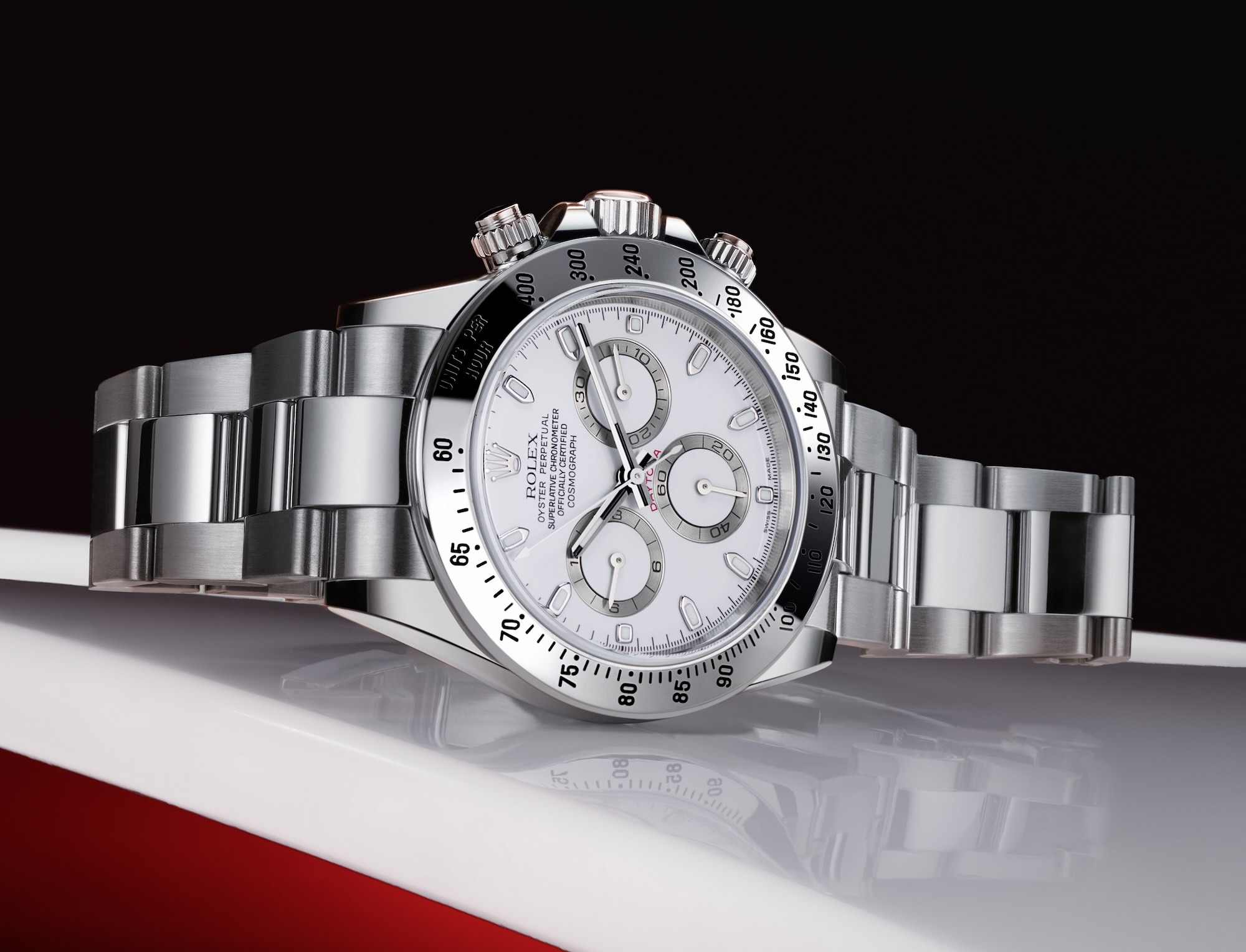 2000, Daytona with in-house calibre, reference 116520
In 2000, for the new millennium, the Daytona gained a new in-house movement, the calibre 4130, as well as slight design revisions under the new reference 116520. There again, only two steel models were available, with white or black lacquered dials; this time, however, both models used silver-toned sub-counter rings. In 2011, Rolex introduced Cerachrom ceramic bezels to the Daytona collection, on precious metal editions. In 2016, the steel Daytona was revised, as the previous reference 116520 was replaced by the new 116500LN, which gained a ceramic bezel and revised dials – black with silver rings or white with black rings. Again, only 2 references in steel were available.
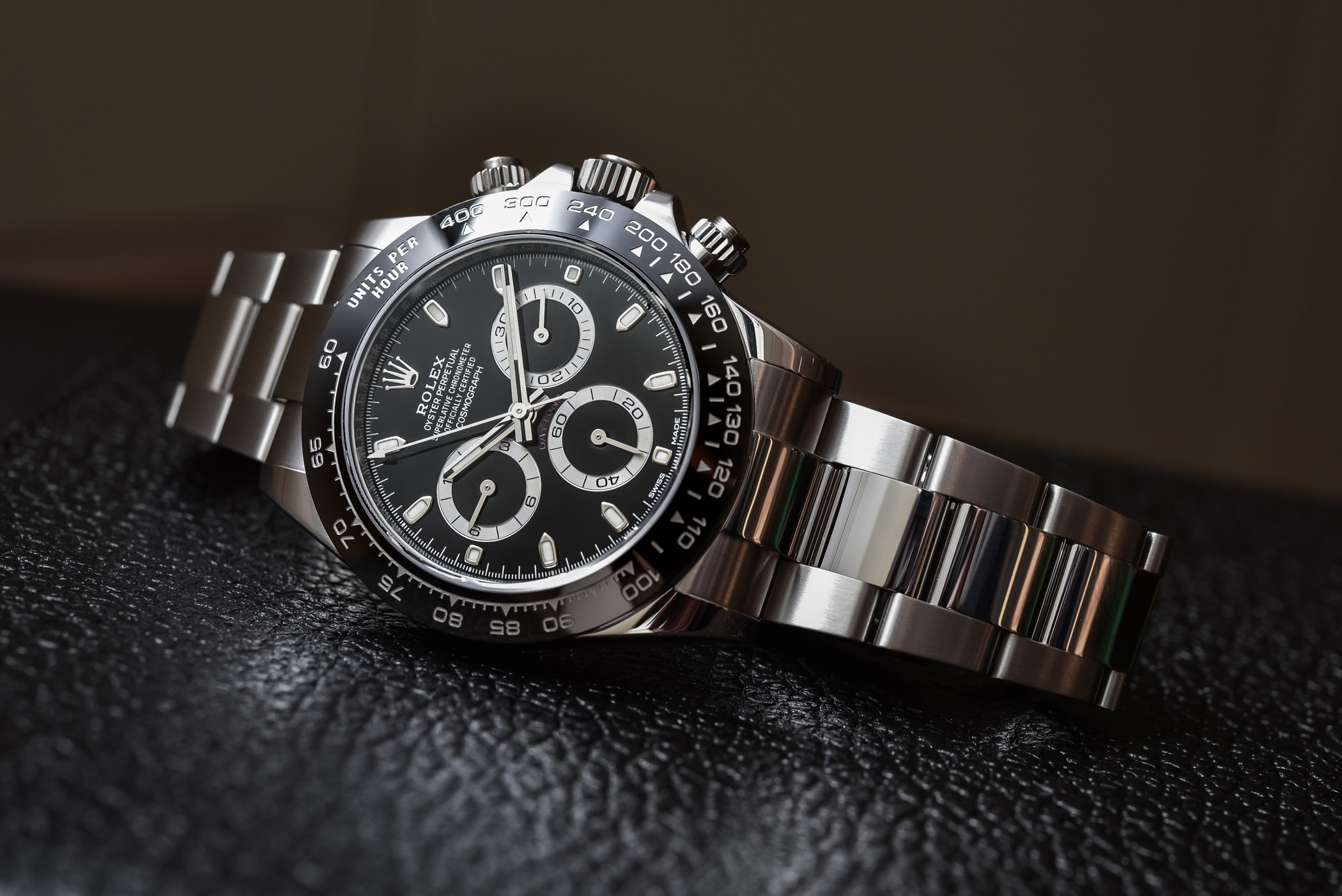 2016 – updated model with ceramic bezel, reference 116500LN
Finally, in 2023, for its 60th anniversary, the Oyster Perpetual Cosmograph Daytona was updated once more. The steel references, known as the 126500LN, gained a revised movement (calibre 4131), a slightly stronger but thinner case, a new ring around the Cerachrom insert and refined dials, which, once again, were only available in black or white, with contrasting sub-dial rings.
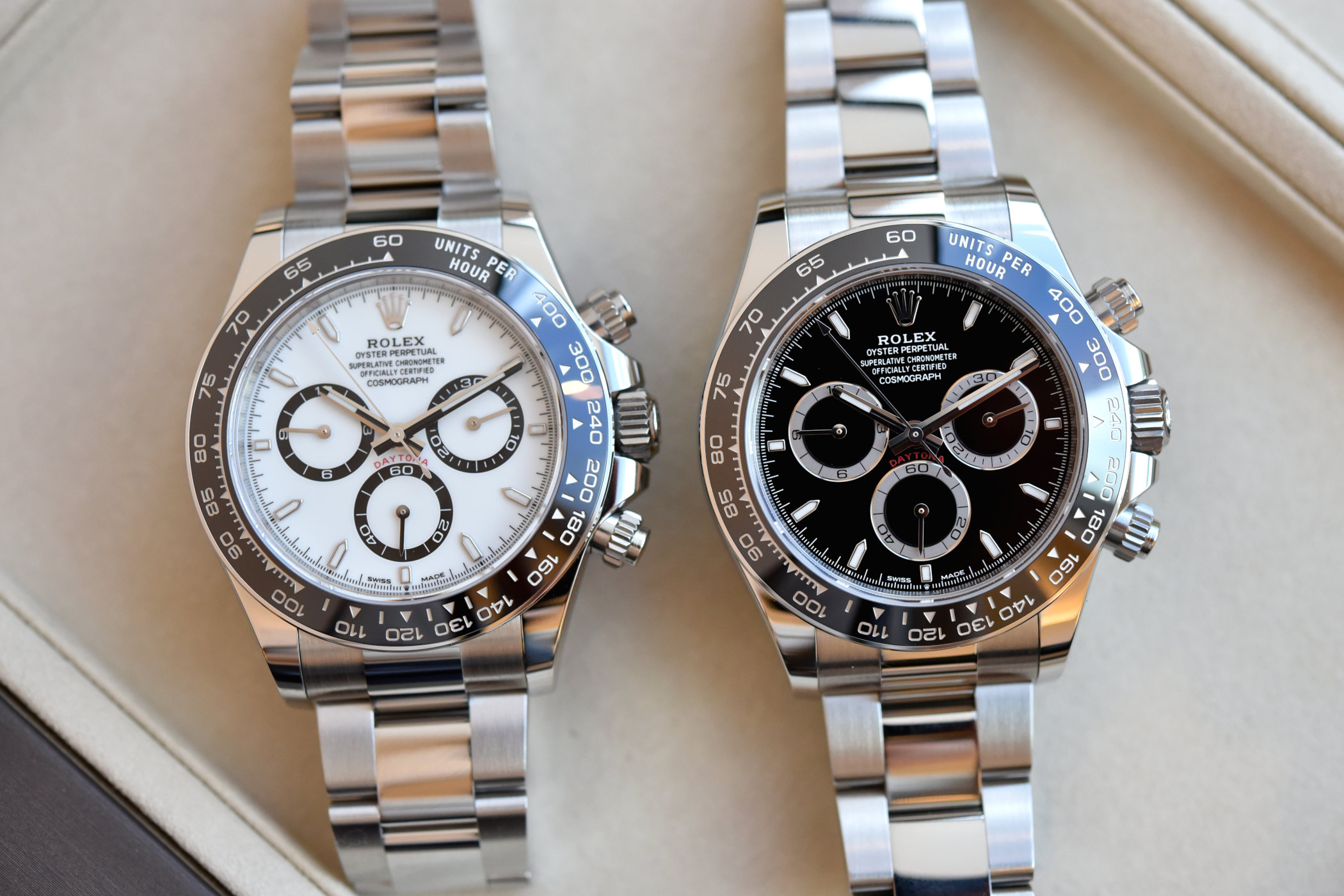 2023 – updated Daytona with revised movement and design, reference 126500LN
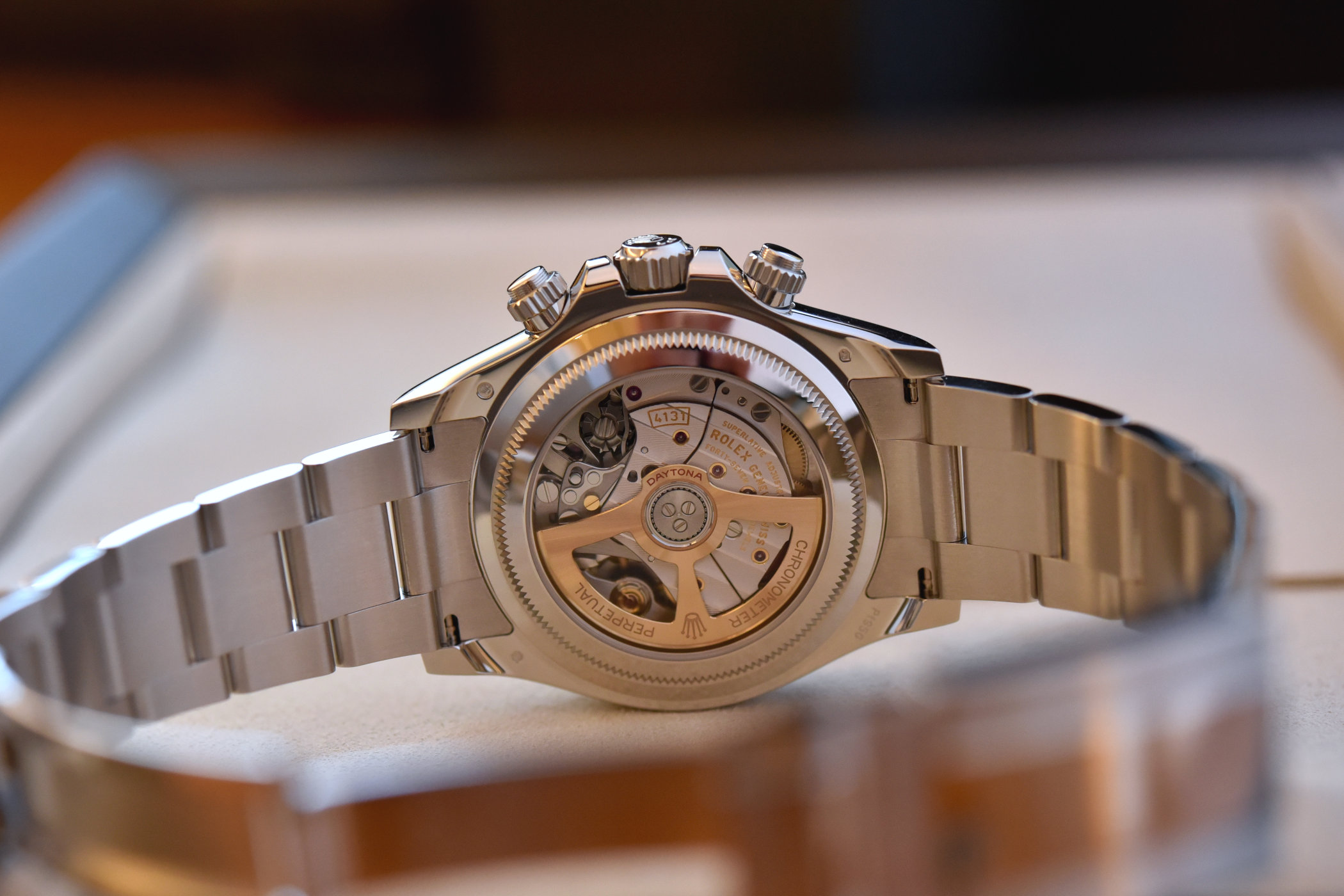 The open caseback of a 2023 platinum Daytona reference 126506
Additionally, two elements to keep in mind. From 1963 to 2016, all steel Daytona watches essentially had the same tachymeter scale with horizontally-engraved or printed numerals. This only changed in 2016 with the introduction of ceramic bezels on the steel 116500LN, which, like all other versions with this high-tech bezel, featured radially-engraved numerals on the tachy scale. Second, there’s never been a steel Daytona with an open back until 2026. And remember that this fancy feature only appeared in 2023 with the platinum 126506, and a few months later, on the very exclusive Le Mans 126529LN. The latter has been considered for the past 3 years, whether in white, yellow or rose gold, as the ultimate take on the Daytona, an almost-impossible-to-get collector’s dream. But there’s now a new watch to rule them all… possibly.
The Daytona Rolesium 126502, ESSENTIALLY a steel watch
What is the Cosmograph Daytona Rolesium 126502 all about? Essentially, at least for me, two things. One, it is the new top-of-the-range model, not because of its luxurious materials (that’s the role of the platinum 126506), but by exclusivity. The Daytona 126502 is the ultimate collector’s chronograph by Rolex, a watch that only a few can even remotely consider ordering, a watch that could be the end-game model. Second, it is a compilation of everything great that has been applied to the Daytona since 1963, a “best of” if you will, packing multiple historical references on its bezel and dial, but also bringing to a steel model features only previously reserved to precious versions, and then some… The Daytona Rolesium 126502 is unique in multiple regards and truly fantastic to handle and wear – even if I doubt that these will ever be worn in real life. We know about “garage queens” for cars; these Rolesium models will probably become “safe queens” for the most part. Sadly…
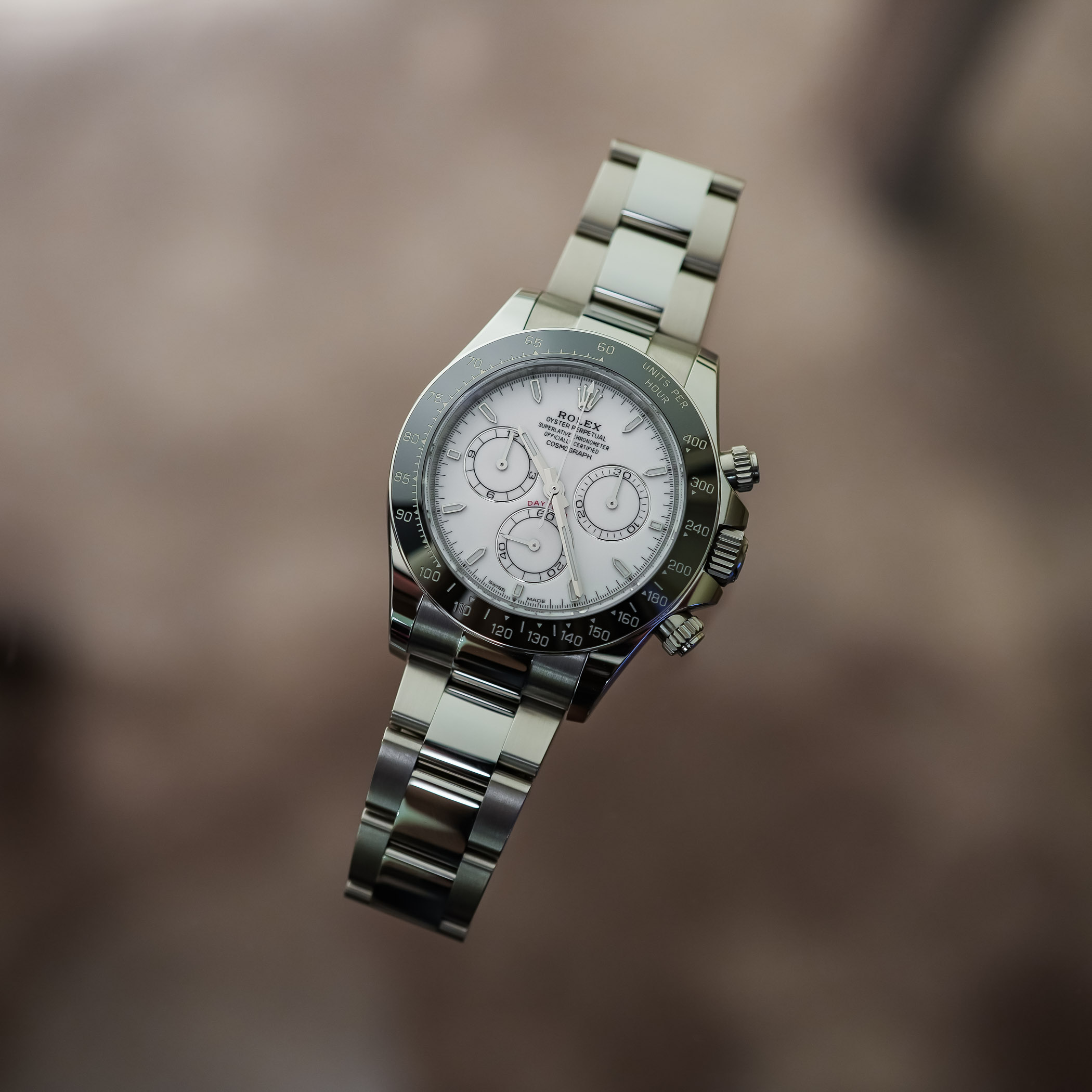
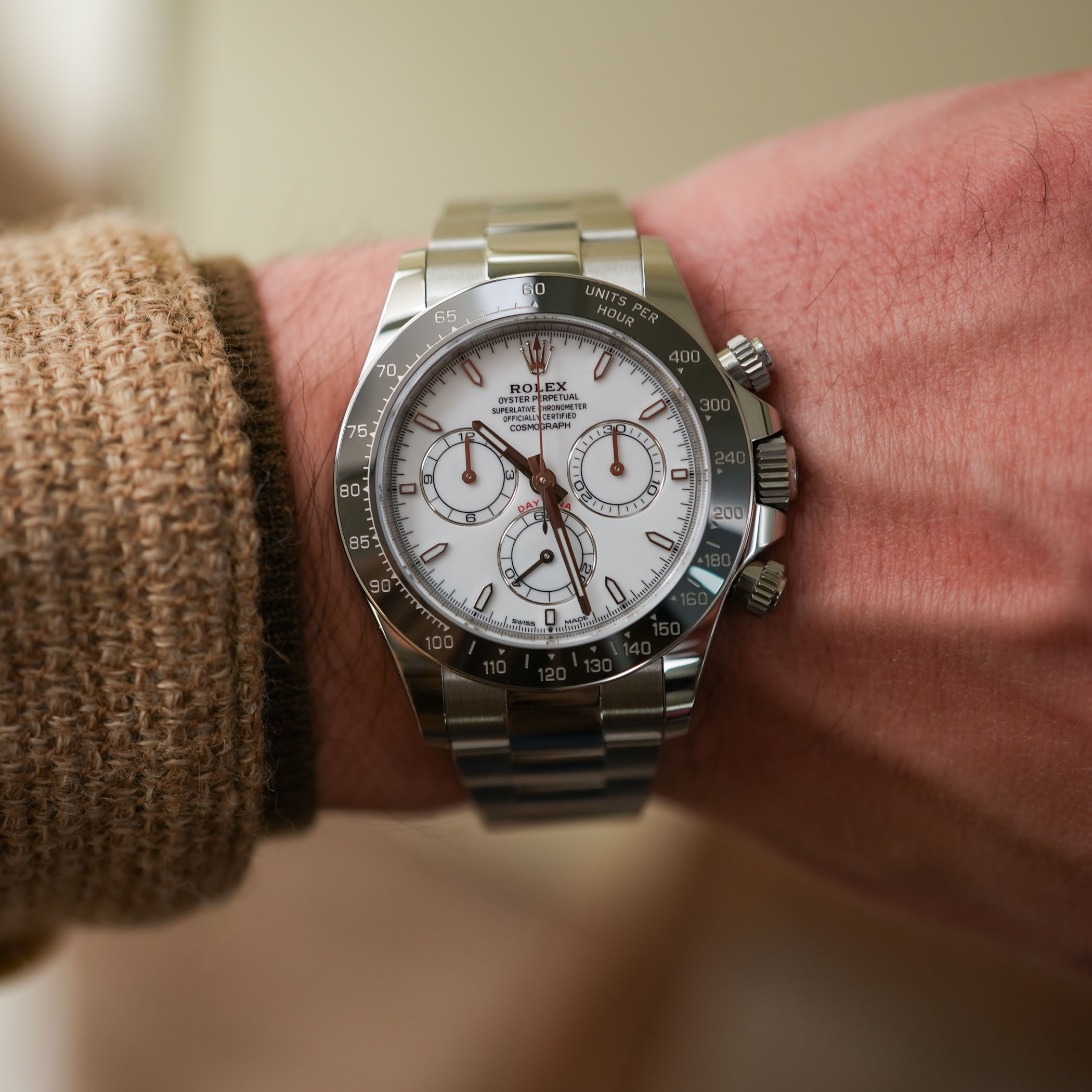
Let’s talk about the watch in detail now. Starting with the case, which is known but not entirely. At first, the new Daytona Rolesium 126502 is essentially a steel watch, for most of it, sharing its Oystersteel middle case with the two 126500LN references – note that these two are still part of the collection. This means the recently revised and more symmetrical case of the 126xxx generation, a 40mm diameter, a thickness rated here at 12,20mm (vs. 11.90mm for the steel models with closed back) and everything else that you’ve come to expect from a modern Daytona: 100m water-resistance, Triplock screw-down crown and pushers (sadly the latter are still there…), flat sapphire crystal with anti-reflective coating, newly designed, more rounded crown guards that follow the curvature of the bezel. For over 90% of its weight, this new Daytona reference is made of Oystersteel.
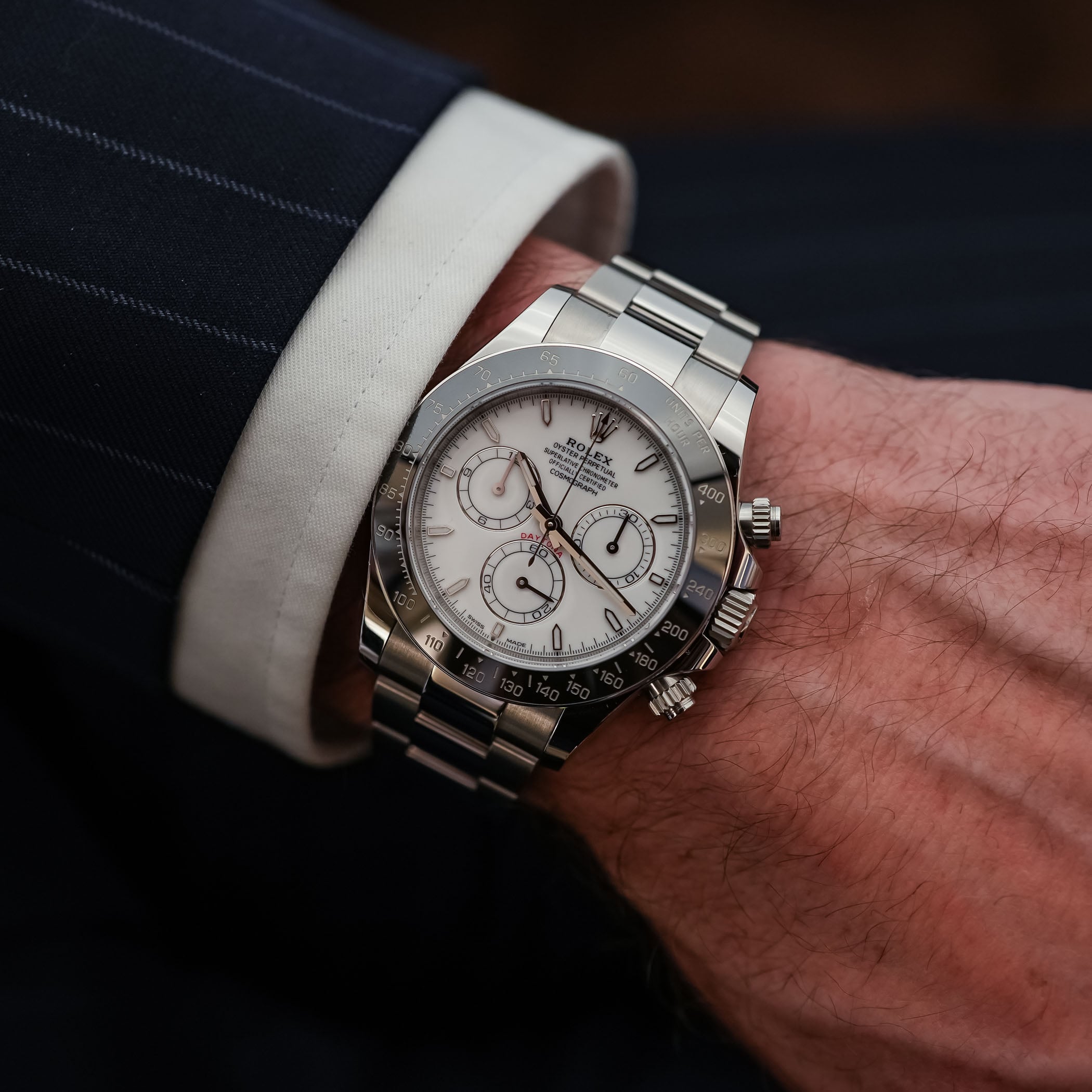
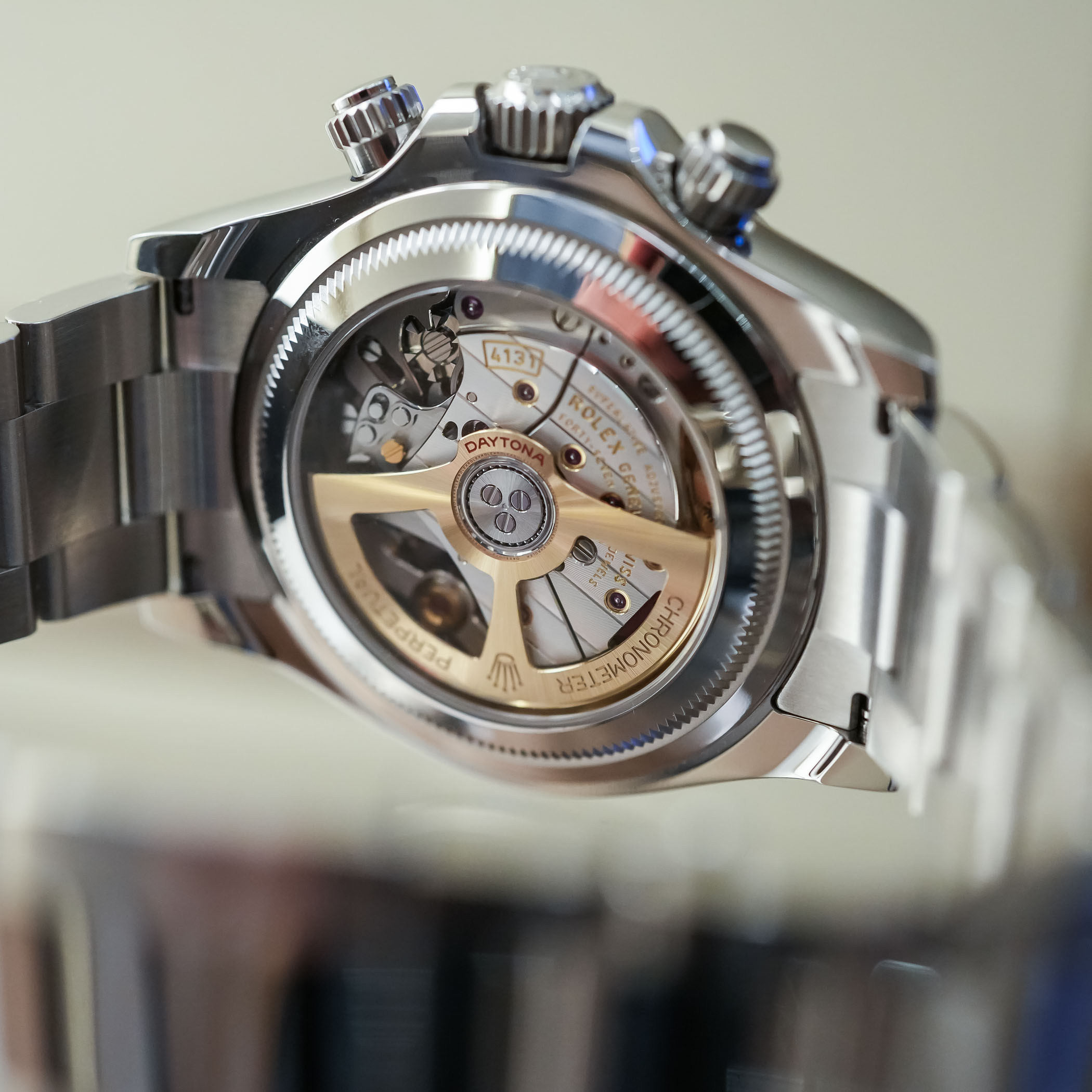
What about the other 10-ish percents… Well, the watch is made of a combination of materials named Rolesium, a feature far less common than Rolesor (steel and gold), which indicates a watch mostly made of steel, with accents made of platinum. This combination has been, until now, exclusive to the Yacht-Master and Yacht-Master II collections, where the bezel of steel models is made of platinum with a scale in positive relief. In the context of the Daytona, platinum is used for the caseback ring, which frames a sapphire crystal (indeed, you can now see the movement on a Daytona majorly made of steel), as well as for the ring framing the bezel’s insert.
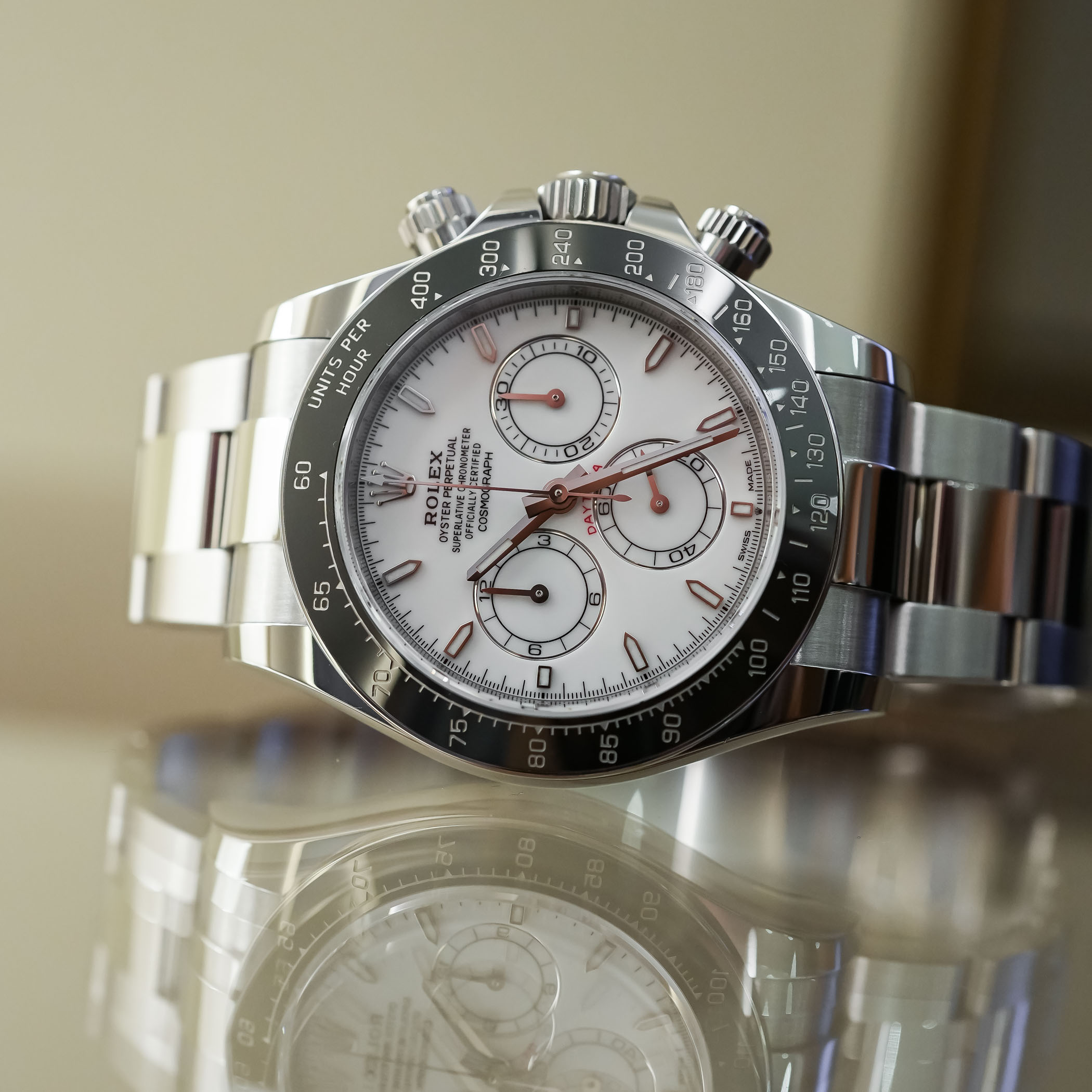
The reasoning behind the use of platinum in such places remains, to me at least, a question without an answer. Not only is the colour of platinum hardly different from that of steel, but its use on the back makes it imperceptible, and its use on the bezel ring less resistant to scratches. Besides the idea of making the watch more exclusive and more precious, I don’t really get it…
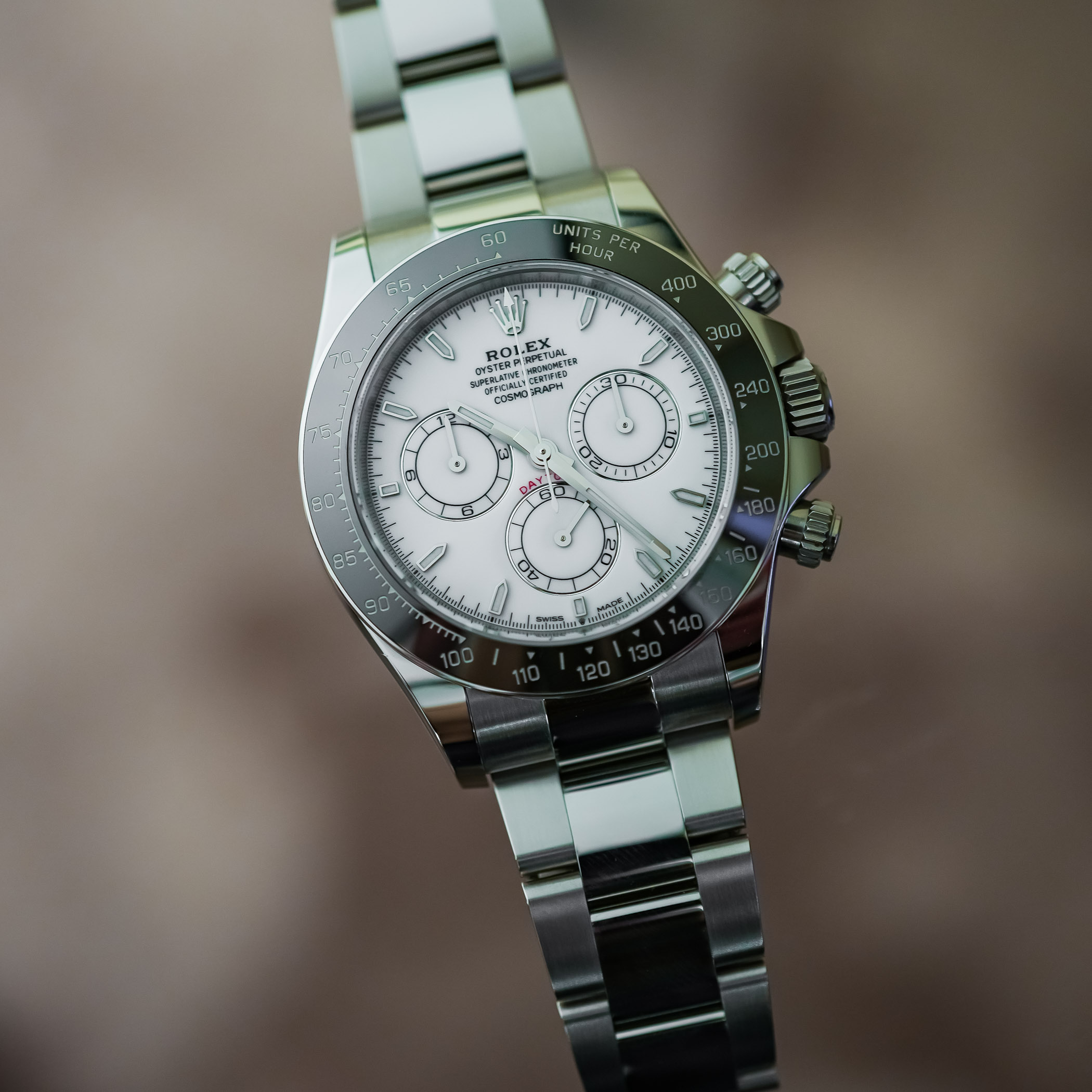
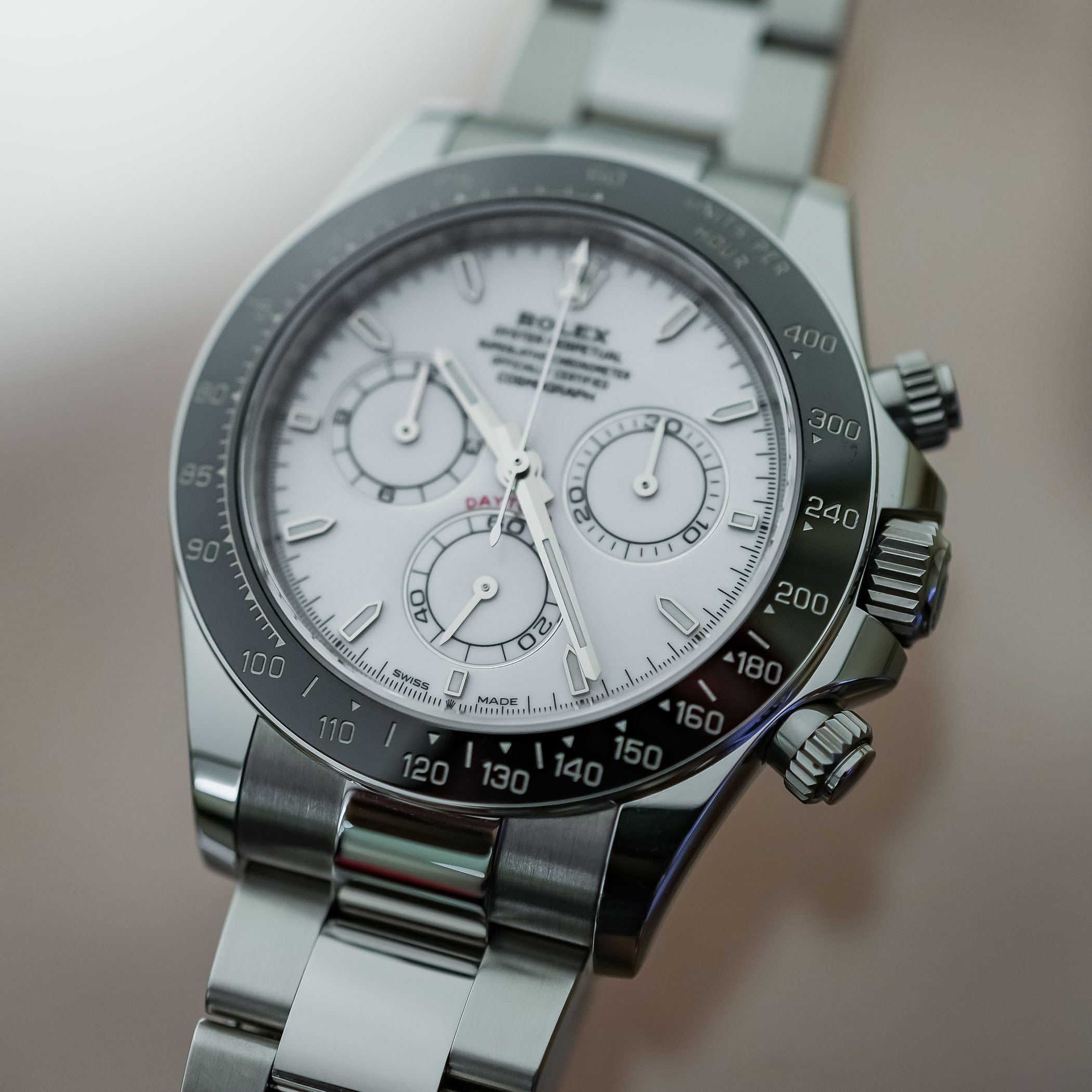
Let’s move on to a far more interesting part of this Daytona Rolesium 126502: the bezel. Indeed, not only is the material unprecedented, but the look of the insert is much different from anything else Cerachrom we’ve seen since 2011 on precious metal models, or 2016 on steel versions. These introduced a new design with the numerals placed in a radial layout, meaning that everything on the bottom part of the bezel was upside down. The different speeds on the bezel were also highlighted by fairly large triangles. The new Daytona 126502 changes everything, or to be more precise, goes back to the roots. Indeed, just like the 126500LN reintroduced a metallic frame around the insert, looking back to the old days of the acrylic inserts, the Rolesium Daytona brings back elements of the past.
First, the insert isn’t black but anthracite with a discreet metallic effect, a toned-down sheen that’s due to the inclusion within the mostly zirconia-based material of tungsten carbide (for which a patent application was filed). In addition, the graduation of the tachymeter scale, which is moulded into the ceramic/tungsten material, has been redesigned. No more radially-engraved numerals, but a comeback to the classic look that we’ve known from 1963 until 2016, with the numerals displayed horizontally. That said, these suspended numerals (as Rolex calls them) are using a modern font and smaller triangles to indicate the speeds. In addition, all inscriptions are now smaller, more refined and more detailed, resulting in a more classic, slightly more elegant overall look than what’s used on all other Daytona ceramic references. What doesn’t change is the use of platinum by PVD coating to apply the silver colour on this scale.
A new enamel dial
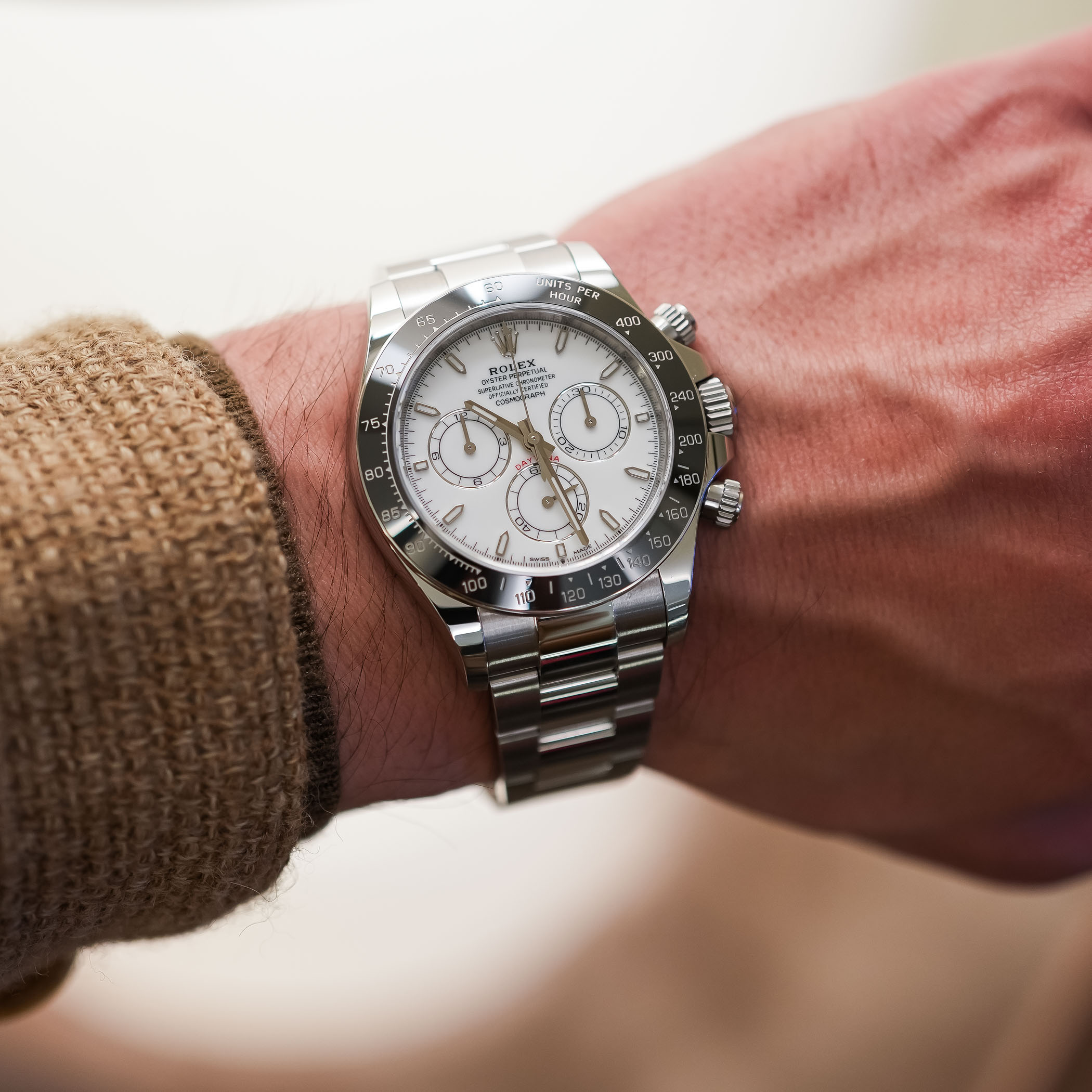
The dial of the Daytona Rolesium 126502 is unprecedented in multiple regards, whether we talk about colours or materials. As said in the introduction, the steel Daytona models have always been available with contrasting rings or sub-dials, paired with a white or black dial. This new Daytona reference introduces for the first time (at least officially, and not just on a prototype level) a full-white dial, with tone-on-tone sub-counters that we’ve immediately nicknamed “Albino” within the team. The monochromatic scheme doesn’t end there, as the hour and minute hands are also different from a traditional steel 126500LN, now without the black middle insert (despite its presence since 1988). The hands, made of white gold, are identical to those found on a platinum 126506 and are fully polished with only a white luminous insert. Surprisingly, the 126502 is fairly legible despite its monochromatic scheme, the quietness of the dial making it easy to read.
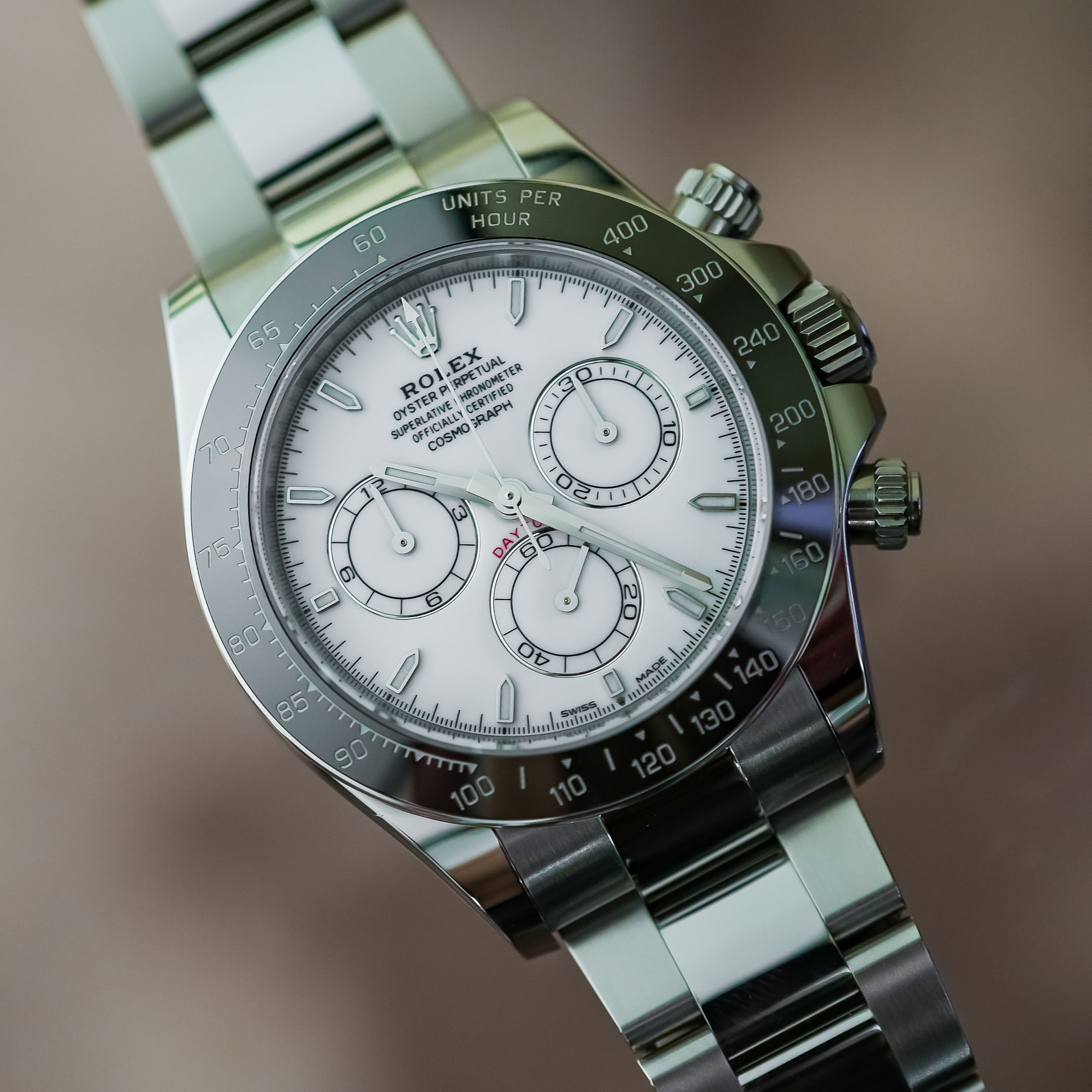
Next, and importantly, is the material used for the dial. For this exclusive edition, Rolex went unexpectedly traditional and high-end, with a dial made in grand feu enamel, which feels like a tribute to the early days of the automatic Daytona and the “floating porcelain” white dials of the reference 16520 (these were not actual porcelain, but lacquer). To reproduce this milky, glossy effect, Rolex uses a technique normally seen in classic high-end horology. But as we’ve seen with the guilloché dial of the Perpetual 1908 Platinum, Rolex isn’t shy anymore to use traditional techniques. But Rolex being Rolex, the dial of the Daytona Rolesium has a few tricks up its sleeve.
Despite being grand feu enamel, the dial required the development of a special production process in order to avoid the cracking issue that can occur with this material. As explained by the brand, “following application of the enamel powder mixed with water, the future dial is placed in a kiln heated to over 800 degrees Celsius. Traditionally, the liquid enamel mixture is applied to a metal base. In the case of this watch, however, it is coated onto ceramic plates – one for the dial itself and three others for the counters – which are fitted to a brass base after the vitrification firing phase.”
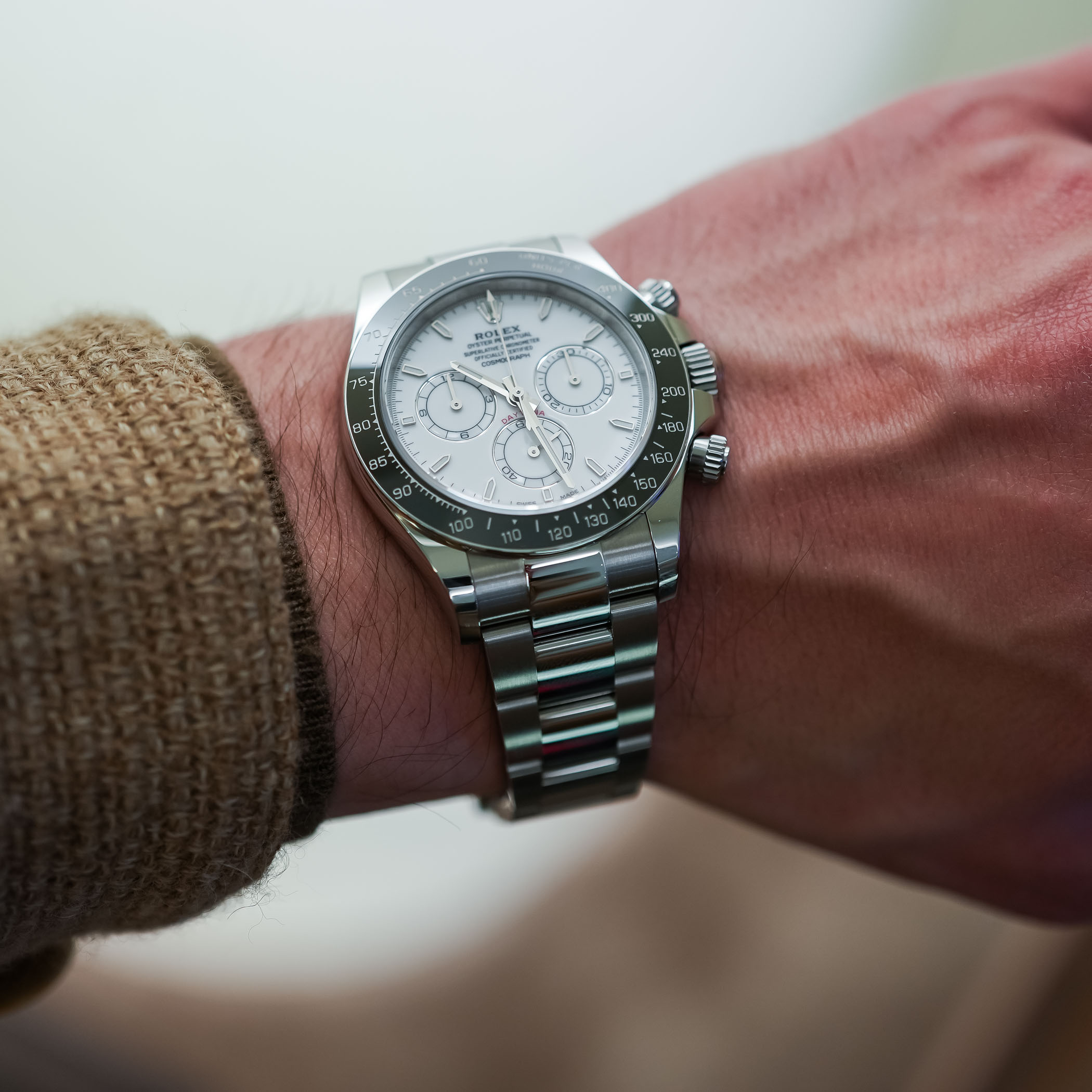
The result is, as you’d expect from enamel, a milky, glossy surface that reflects the ambient light and has a more three-dimensional effect than classic lacquer, the different elements of the dial having a slightly domed effect, with the sub-counters more sunken than traditionally. All printings are done by using a pad-printing process and not enamelling, as we see in some higher-end watches, including the emblematic red Daytona inscription.
Calibre 4131 and Oyster bracelet
No changes to be reported on these two topics. The Rolex Daytona Rolesium 126502 is still powered by the (now visible) calibre 4131, an evolution of the calibre 4030 now fitted with a modern Chronergy escapement. This integrated, automatic chronograph movement with column wheel and vertical clutch is often, and rightfully so, regarded as a benchmark for such an architecture. It benefits here from a nicer decoration than before, with Rolex Geneva stripes and a solid yellow gold rotor (which you won’t find on a steel 126500LN). The movement comes with the Superlative Chronometer certification, which has been updated this year with the addition of three new testing criteria: resistance to magnetism, reliability and sustainability.
Regarding the bracelet, the Daytona 126502 retains the same 3-link Oyster bracelet as a steel edition, with its practical Oysterlock folding safety clasp with Easylink comfort extension link (approx. 5 mm).
Thoughts, price and availability
The new Rolex Oyster Perpetual Cosmograph Daytona Rolesium 126502 is bringing mixed feelings to me. On the one hand, I can’t avoid being stunned by its look. It is, as we discussed with our founder Frank, potentially the best-looking, most appealing, most desirable Daytona in the collection. I know this is a highly subjective topic, but in my own eyes, this new Rolesium model is an absolute success in terms of design, as well as execution. The vintage references, the enamel dial, the refined and retro-styled bezel layout, the Albino look of the dial, the open back to finally enjoy what’s always been an interesting movement… Just like the “Ed White” Moonwatch Calibre 321 is often seen as the ultimate Speedmaster, this Daytona Rolesium 126502 could well be the end-game Cosmograph.
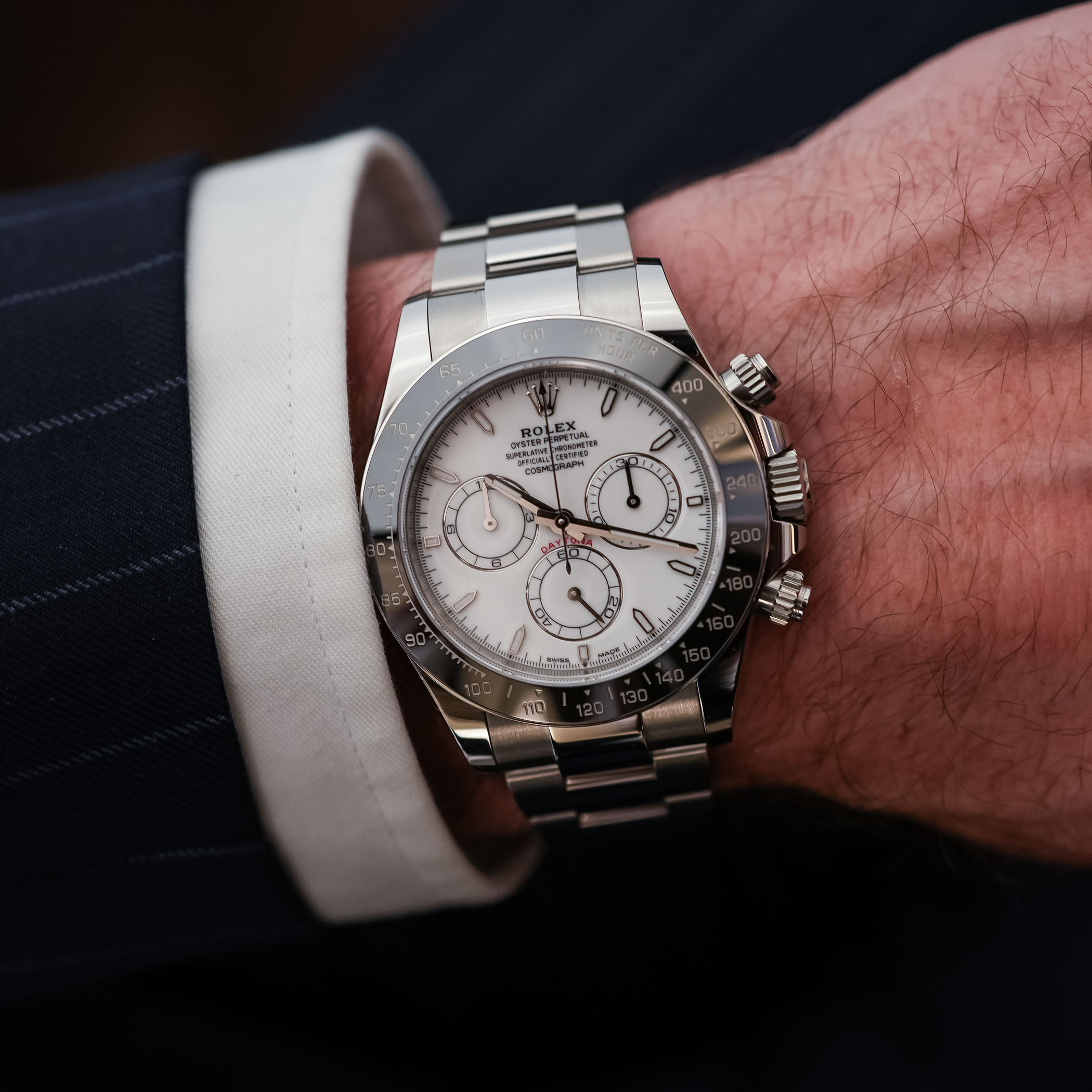
There are, however, several topics that need to be addressed. First, I’m still questioning the use of platinum in places that don’t necessarily make a lot of sense, or at least don’t bring true, perceivable added value. On a Rolesor Daytona, you can see gold on the bezel, middle links, pushers and crown. Here, platinum, being silver-toned and used in the back and on the bezel’s frame, you hardly see or feel it.
Second, pricing and availability. Let’s be clear on both topics: the Daytona Rolesium 126502 is not going to be an easy watch to acquire. First and foremost, and just like the three Le Mans editions, this new Albino/Rolesium edition is an off-catalogue model. What it means is that it isn’t listed on the brand’s website, it is not printed in official catalogues, it won’t be displayed in boutiques (even as a non-commercial piece), and it can only be ordered if you get access to an allocation slot. And for that, it’s not just about being friendly with your sales assistant… Production numbers will be low, deliveries too.
Then, the price. A classic steel Daytona 126500LN is currently retailing for EUR 16,350 or USD 16,900. The new Daytona Rolesium will be priced at EUR 56,160 or USD 57,800, or about 40,000 (choose your currency) more than an Oystersteel model, and in the same price bracket as a solid gold Daytona (around 51k to 55k euros). I know that we have to account for the platinum parts, as well as a 4-part grand feu enamel dial on a ceramic base, which is objectively not something easy to produce (to say the least, specifically for multi-part enamel dials), and a new material for the bezel. This new watch is objectively expensive, even if you count the amount of R&D that went into the bezel and dial.
Then again, as we’ve seen with every single Daytona reference in recent years, and in particular rare editions like the Le Mans, these hold their value very well and often trade for more than what you’ll pay at retail – if you can get one at retail. There’s no doubt that this new 126502 will gain value over time. And that also leads to my last comment: these watches will not only be extremely hard to obtain, but the few that will be delivered, most likely, won’t see much wrist time. Which is sad, as it looks and feels absolutely fabulous! It is a collector’s dream, a sort of grail watch from Rolex to its most loyal clients.
More details at rolex.com.
https://monochrome-watches.com/rolex-daytona-rolesium-126502-white-enamel-ultimate-cosmograph-steel-platinum-review-price/